|
|
- Blog |
- Enterprise Governance in the Agentic Era: Control at the Speed of Execution


Agentic Database DevOps
Enterprise Governance in the Agentic Era: Control at the Speed of Execution

For years, enterprise governance has been built around a simple assumption.
Humans execute.
Processes are designed accordingly. Approvals are structured around people. Controls are enforced through separation of duties. Audit trails capture actions after they happen. Compliance frameworks assume that change is deliberate, paced, and observable.
That model worked.
But it was built for a different speed.
Today, software delivery has accelerated. DevOps pipelines automate application changes. Continuous integration and delivery have reduced release cycles from weeks to hours. Organizations have adapted their governance models to keep up, embedding controls into pipelines and workflows.
And still, one assumption remained intact.
Execution is human.
That assumption is now breaking.
At IBM Think 2026, Rob Thomas described this shift clearly when discussing the move from AI assistance to AI orchestration across the enterprise. As he framed it, the challenge is no longer simply how organizations use AI, but how they operate AI across the enterprise at scale.
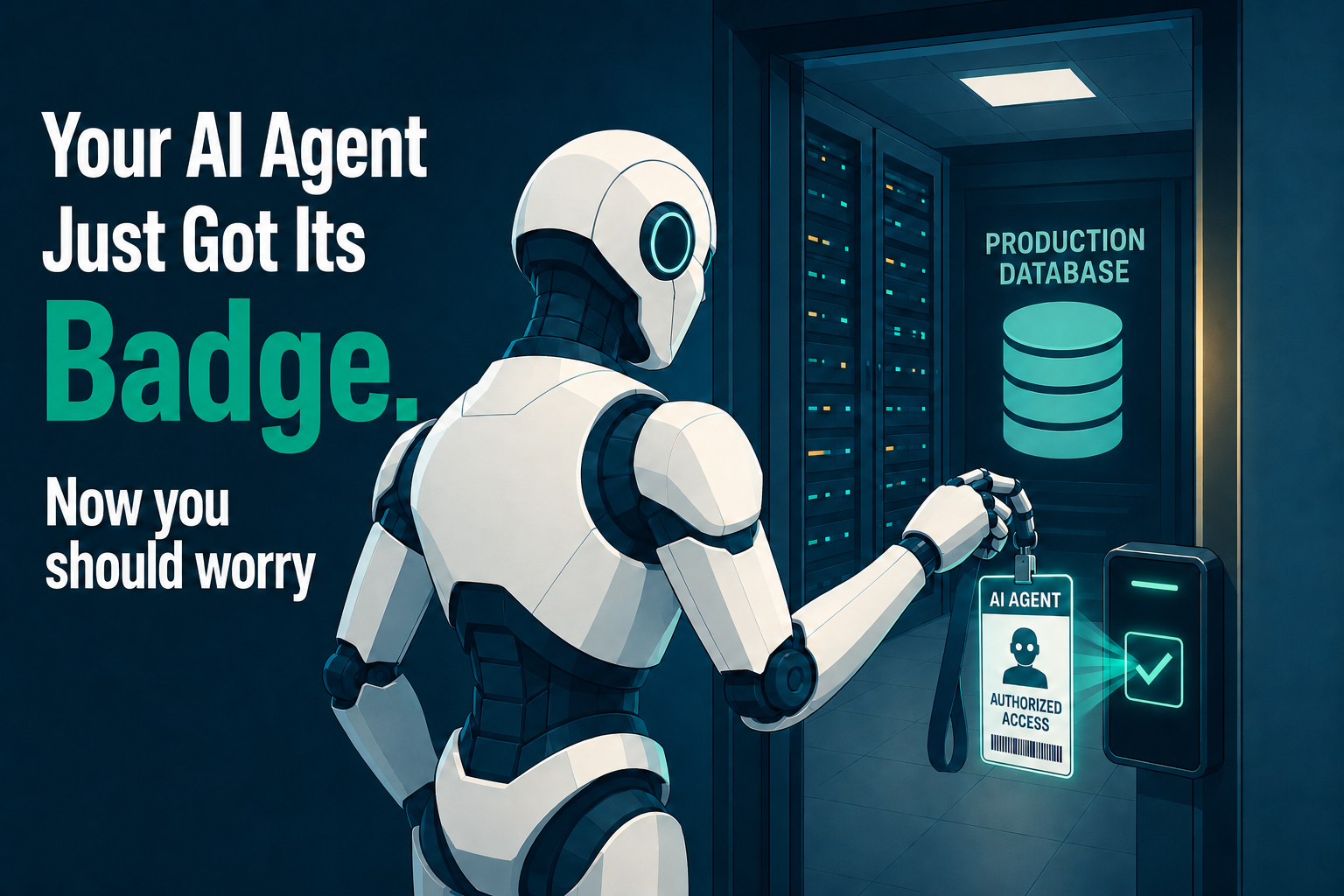
AI is no longer limited to assisting engineers. It is starting to act. It can initiate workflows, orchestrate deployments, and carry out operations across environments.
Execution is shifting from human-paced to machine-paced.
This is where enterprise governance faces its next major challenge.
When execution happens at machine speed, traditional governance models begin to show their limits. Controls that rely on manual checkpoints or human intervention become bottlenecks. Processes designed for oversight struggle to keep up with autonomous action.
The risk is not just that things move faster.
The risk is that they move without sufficient control.
Enterprise governance in the agentic world is not about adding more approvals or slowing things down. It is about redefining where and how control is enforced.
Control must move closer to execution.
It must be embedded into the systems that perform the actions, not layered on top of them.
This is the core shift.
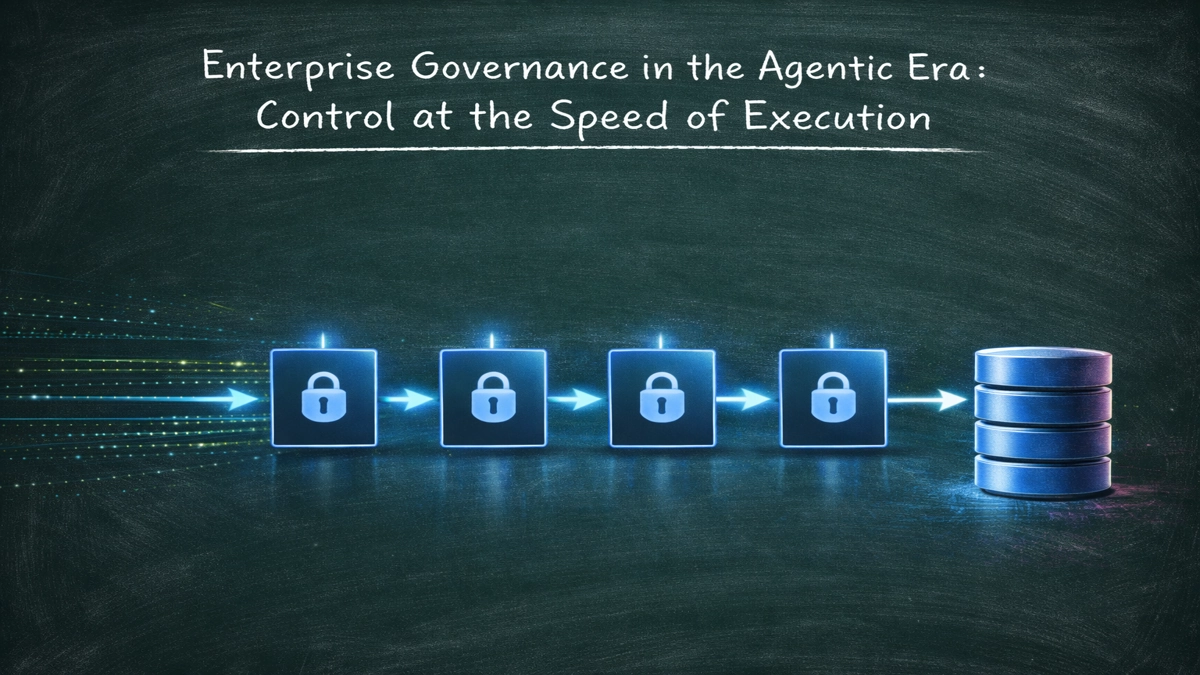
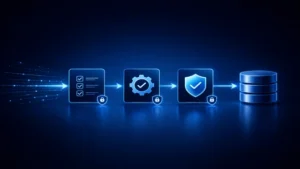
Governance is no longer a checkpoint. It becomes part of the execution path itself.
Every action must be evaluated in real time. Every change must follow defined policies. Every operation must be traceable, reproducible, and aligned with organizational rules.
This requires a different kind of infrastructure.
One where permissions are enforced automatically. Where policies are applied consistently. Where auditability is built into every step of execution. Where no action, human or machine-driven, can bypass control.
In an agentic environment, this is not optional.
It is the foundation that makes autonomous execution viable.
The database is where this becomes most critical.
It holds the organization’s most sensitive and regulated data. Financial records, customer information, operational systems. Changes at the database layer have direct business impact and regulatory implications.
This is why database governance has always been strict.
But it has also been heavily manual.
Small teams of DBAs act as gatekeepers. Changes are reviewed, approved, and executed with caution. Separation of duties is enforced through process. Compliance is often verified after the fact.
This model does not scale into an agentic world.
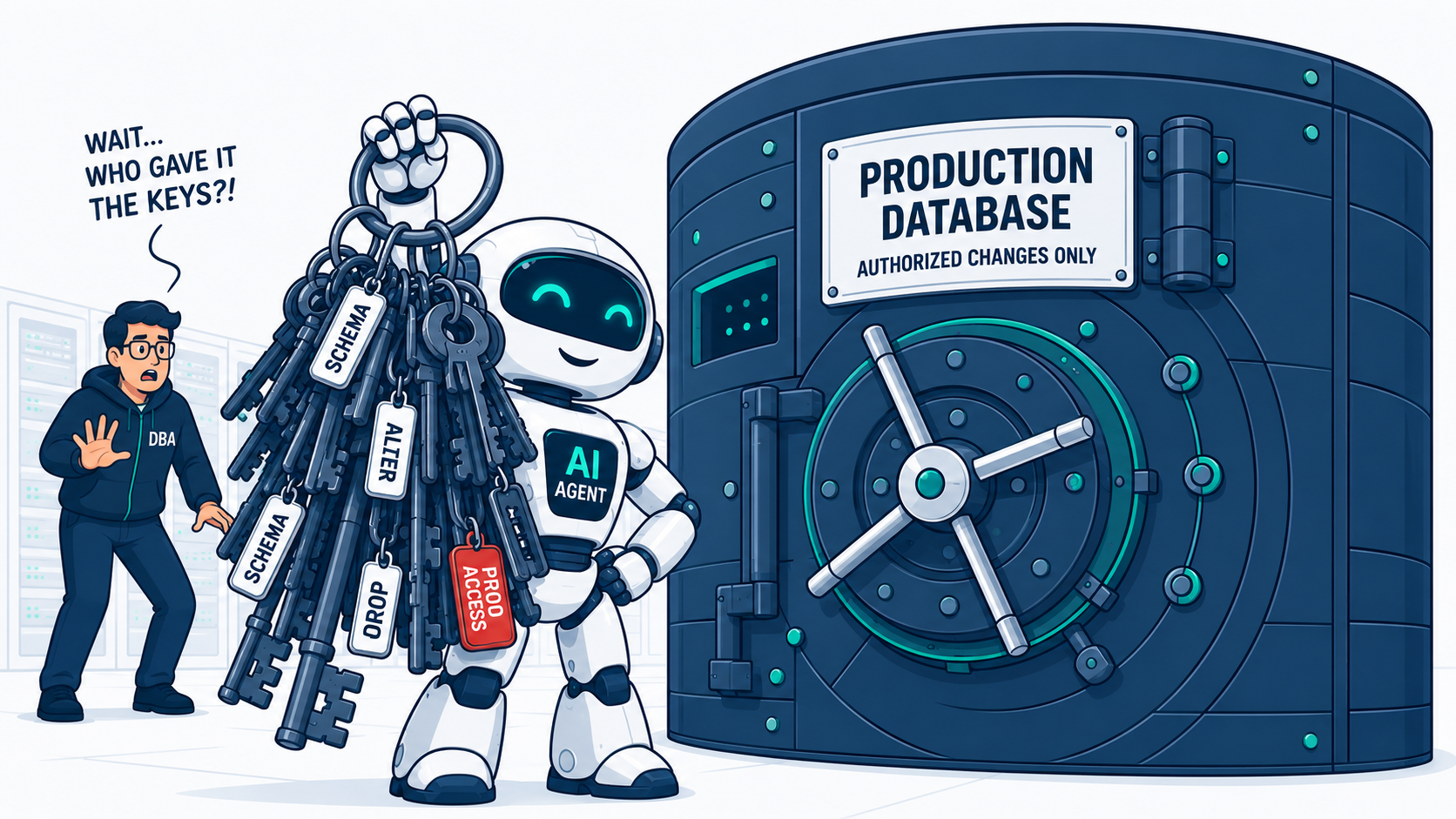
When AI agents can trigger database changes, the idea of manual oversight as the primary control mechanism breaks down. The volume, speed, and complexity of execution require governance to be embedded directly into the execution layer.
This is where DBmaestro plays a defining role.
DBmaestro does not treat governance as an external layer. It builds governance into the core of database DevOps.
With the introduction of the MCP server, this model extends into the agentic world.
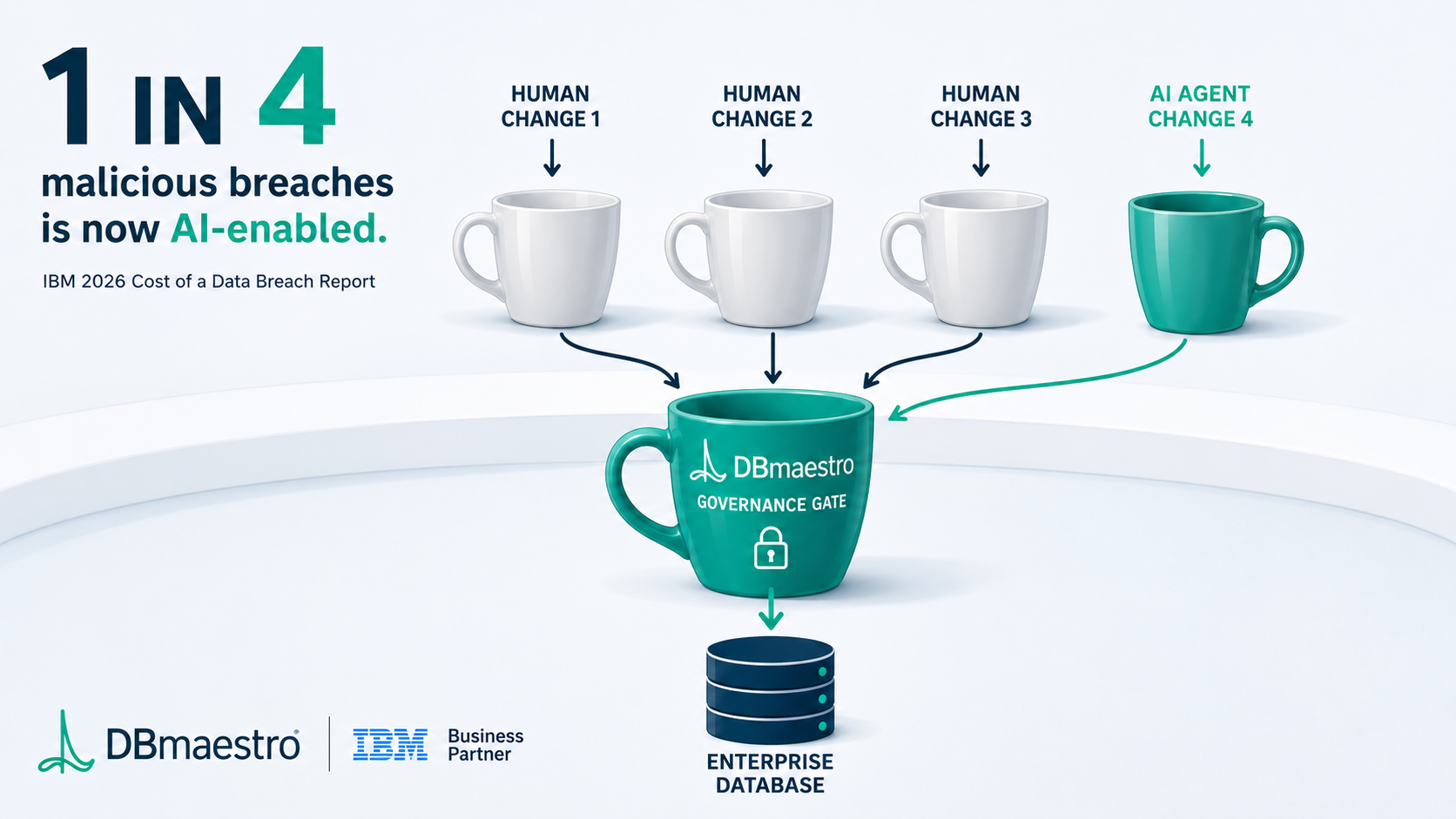
AI agents can interact with the database through DBmaestro, but they do so within a fully governed framework. Every action is subject to role-based permissions. Policies are enforced automatically. Changes are tracked end-to-end. Audit trails are generated in real time.
When an agent initiates a deployment, it does not execute freely. It follows a structured, deterministic workflow. Release automation, CI/CD orchestration, source control validation, and compliance checks are all part of the execution process.
Nothing is bypassed.
Nothing is implicit.
Everything is controlled.
This allows organizations to adopt AI-driven execution without compromising their governance standards.
Instead of choosing between speed and control, they achieve both.
Execution accelerates because manual friction is removed. At the same time, risk is reduced because governance is enforced consistently and automatically.
The benefits are significant.
Organizations gain the ability to scale operations without scaling risk. They reduce dependency on manual oversight while increasing visibility into every action. Compliance becomes continuous rather than periodic. Audit readiness is no longer a project, but a state.
Reliability improves as well. When execution is governed and deterministic, variability decreases. The same processes are applied consistently across environments, reducing the likelihood of errors and drift.
Perhaps most importantly, governance becomes invisible to the user.
Engineers and teams can move quickly, interact through natural language, and trigger complex workflows without needing to navigate layers of manual control. The governance is still there, but it is embedded, automatic, and always active.
This is what enterprise governance looks like in the agentic era.
It is not about restricting action.
It is about enabling safe execution at scale.
AI will continue to evolve. Agents will become more capable. The ability to act will only increase.
But in the enterprise, action without control is not progress.
It is risk.
Enterprise governance must evolve accordingly. It must move from oversight to enforcement, from external processes to embedded execution control.
Because when systems can act on their own, governance cannot sit on the sidelines.
It must be part of every action.
And at the database layer, where the stakes are highest, that control becomes essential.
DBmaestro makes that possible by turning governance into a native part of execution.
Not slowing things down.
But ensuring that everything that moves, moves within control.
Get your demo now