|
|
- Blog |
- The DBmaestro MCP Server: Agentic Access to the Enterprise Database


Agentic Database DevOps
The DBmaestro MCP Server: Agentic Access to the Enterprise Database

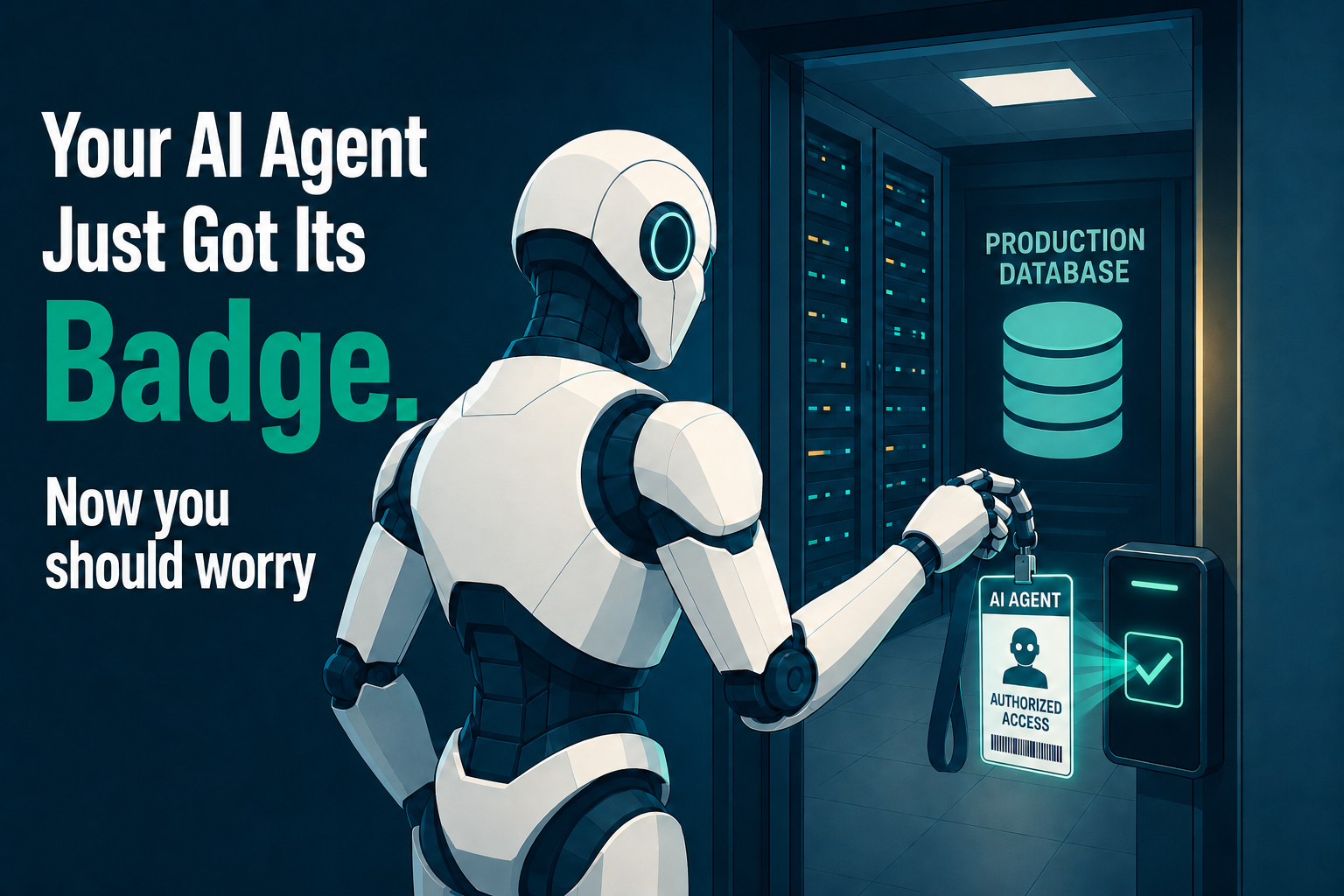
AI agents are rapidly evolving from passive assistants into active operators. They no longer just recommend changes – they execute workflows, trigger pipelines, and orchestrate systems.
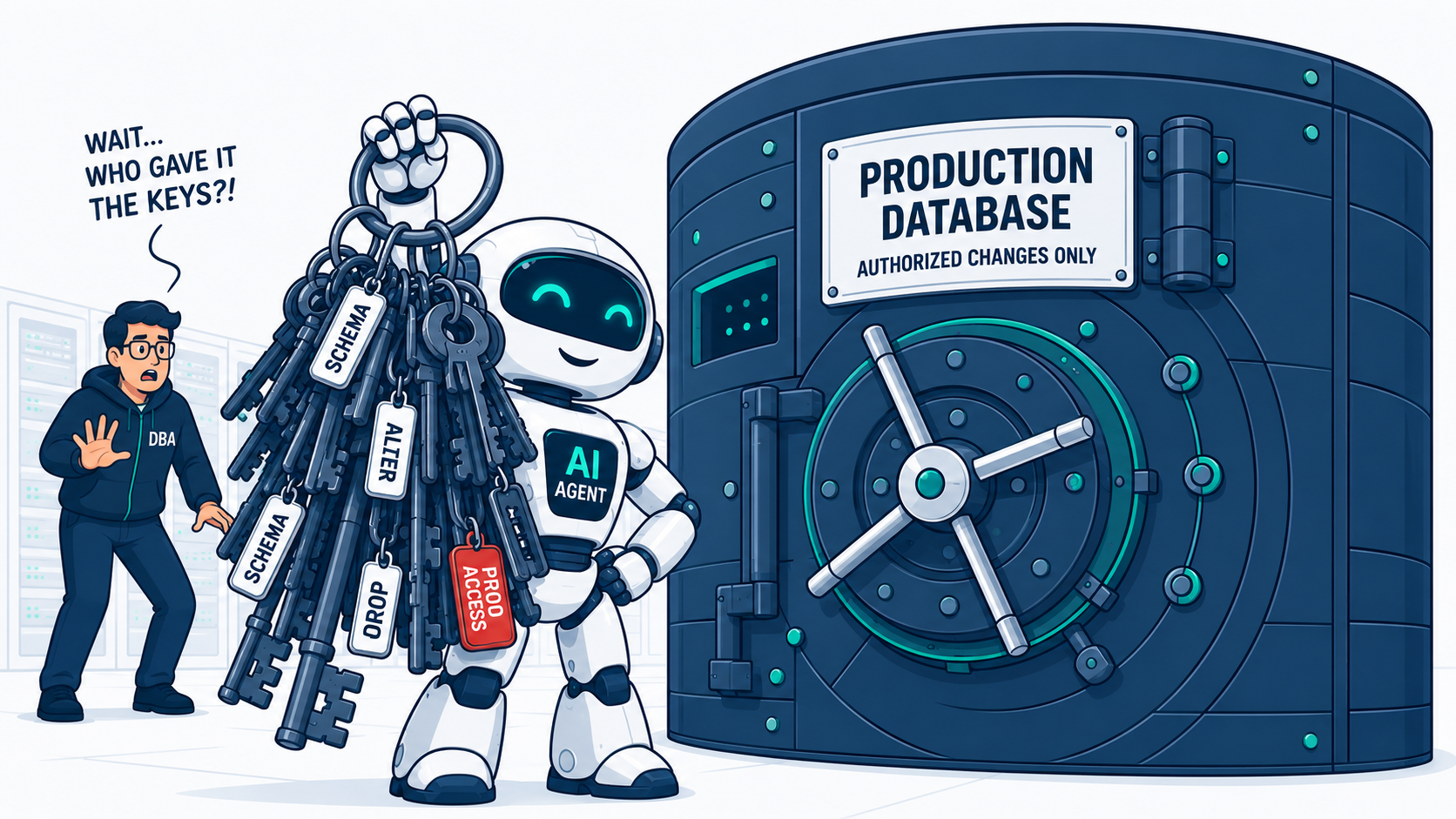
However, databases remain the most sensitive and tightly controlled layer in the enterprise stack. Allowing AI agents direct access without governance introduces unacceptable risk.
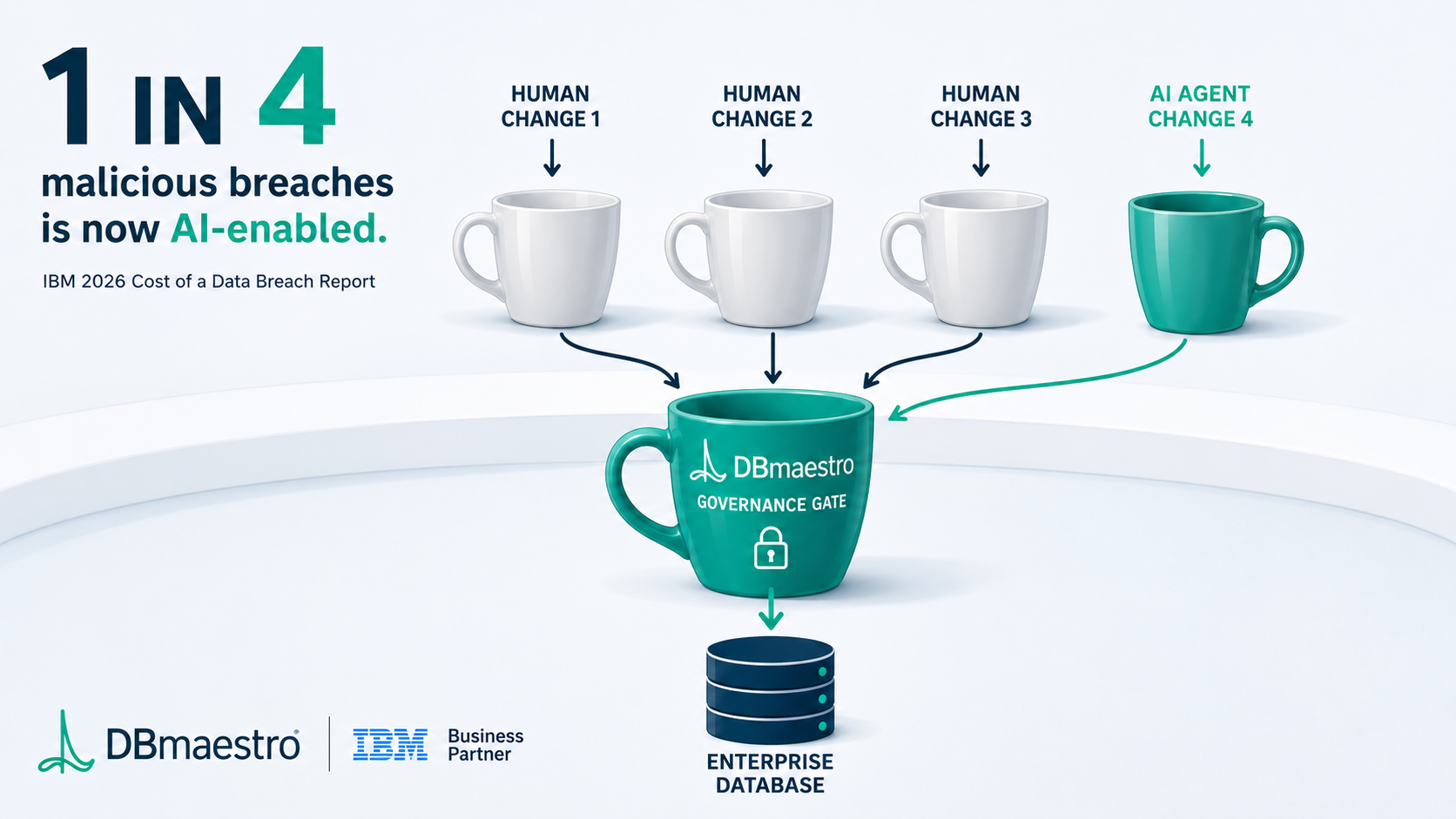
The DBmaestro MCP Server provides a controlled, policy-aware execution layer that enables AI agents to safely interact with enterprise database DevOps workflows.
From AI Suggestions to AI Execution
Most AI tools today stop at code generation, query suggestions, or log analysis. The MCP Server enables true execution across:
- CI/CD orchestration
- Database release pipelines
- Environment provisioning and teardown
- Package promotion, rollback, and downgrade
- Compliance and policy enforcement
What is MCP?
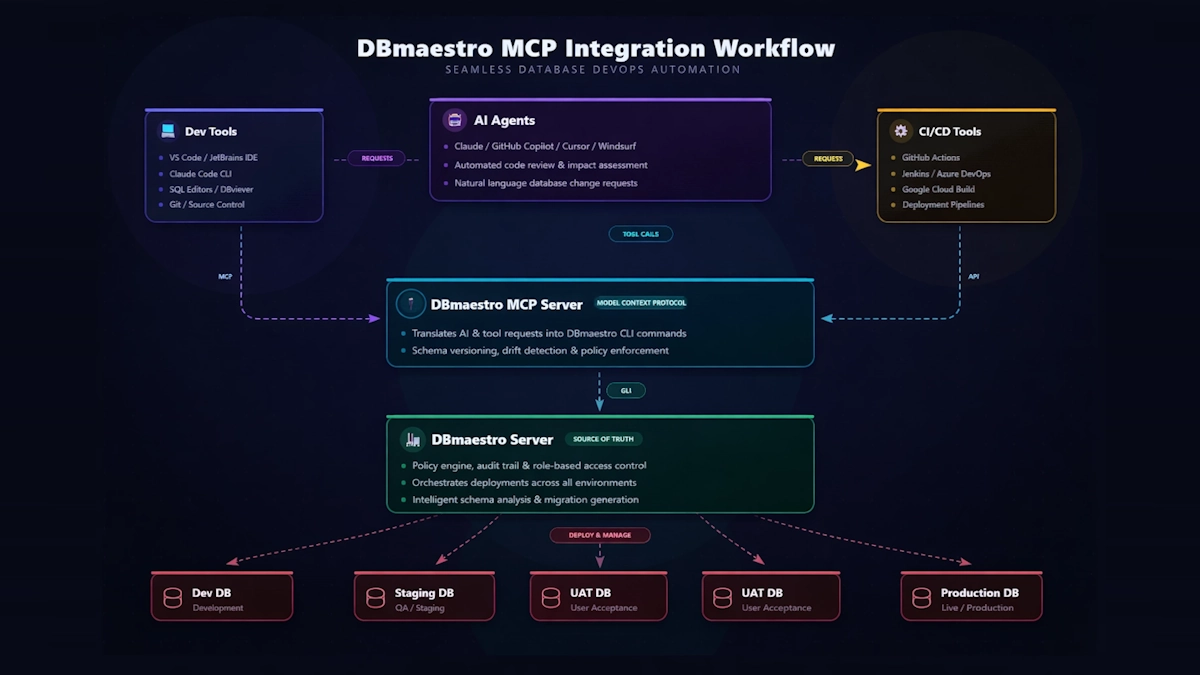
The MCP (Model Context Protocol) Server acts as a secure intermediary between AI agents and enterprise systems.
It translates high-level intent into deterministic, governed actions while enforcing enterprise-grade policies, permissions, and auditability.
Instead of exposing raw database access, MCP exposes a controlled capability surface.
Architecture Overview
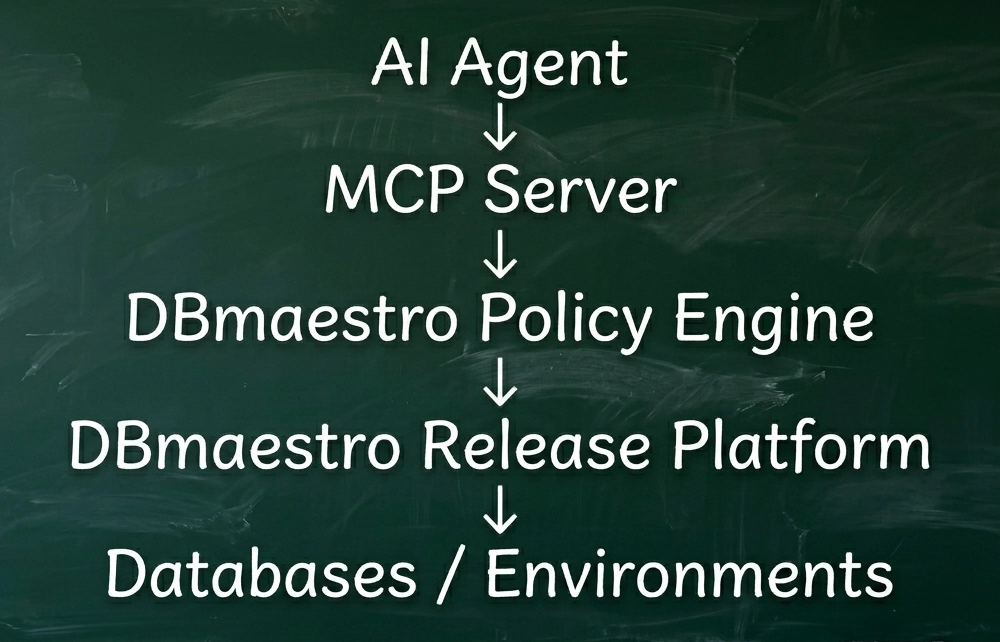
How It Works – Execution Flow
- Agent submits intent (natural language or structured request)
- MCP translates intent into a validated execution plan
- Policy engine enforces RBAC, approvals, and environment rules
- DBmaestro executes deterministic workflows
- Full audit trail is recorded
Example – Full Pipeline Setup via Prompt
Please create 3 MsSQL databases named AI_Integration, AI_QA and AI_Prod
Create a DBmaestro project named AI_Demo
Set environments:
AI_Integration = Release Source
AI_QA = QA
AI_Prod = Production
Upgrade all packages to RS
Promote all packages to QA
Downgrade all packages from QA
Behind the scenes this triggers full pipeline orchestration with validation, sequencing, and governance.
Example – Ephemeral Environment Testing
I have a bug to investigate.
Create a QA environment AI_QA2
Deploy all packages except the last one
After testing:
Remove AI_QA2 and its database
This enables safe, temporary environments without introducing drift or manual cleanup.
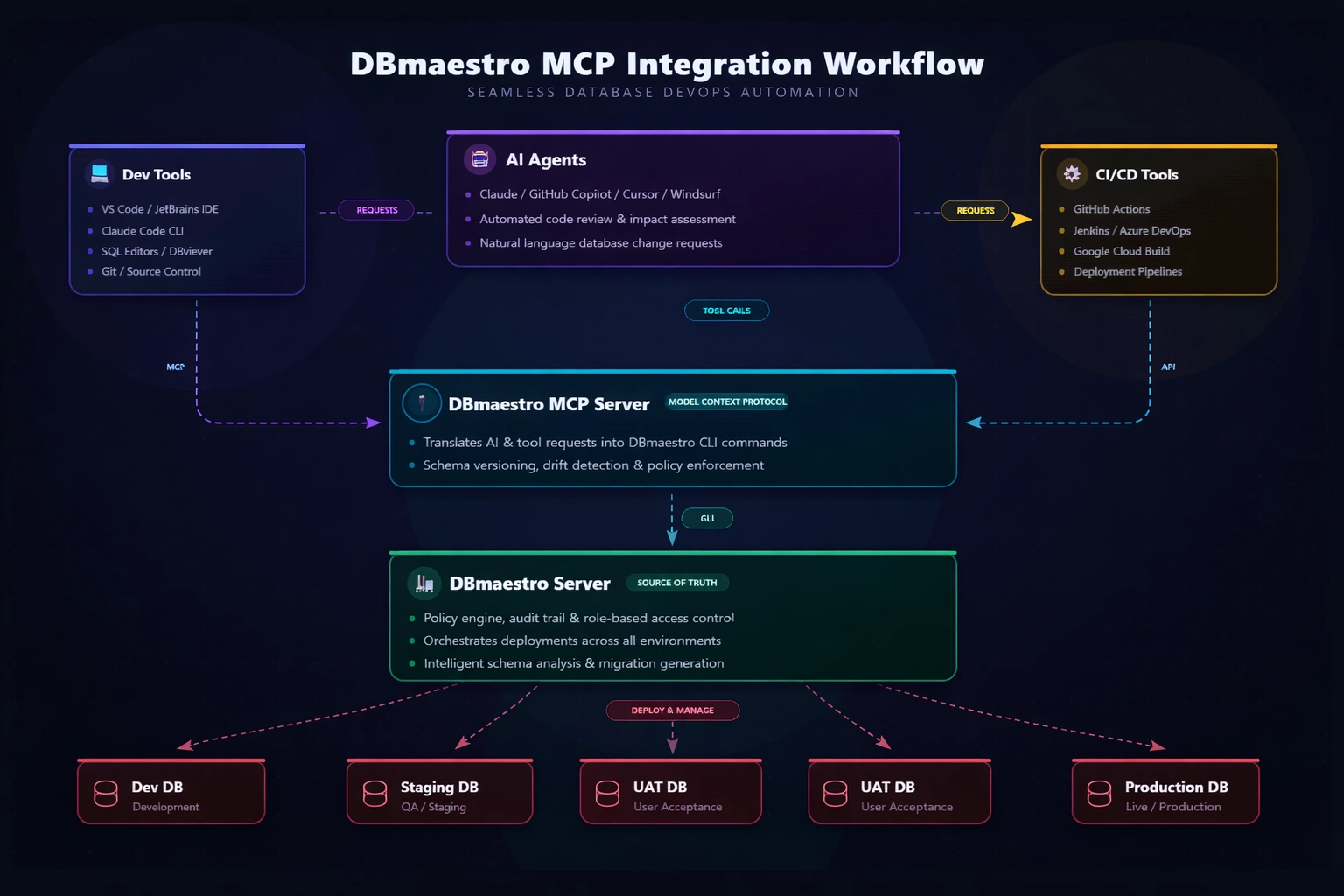
Technical Advantages
Deterministic Execution – AI becomes predictable through controlled workflows
State + Migration Awareness – Combines drift detection with repeatable releases
Enterprise Governance – RBAC, approvals, audit trails built-in
Multi-Environment Orchestration – Handles complex promotion paths safely
MCP vs Direct AI Access
Without MCP:
- AI interacts directly with databases or scripts
- No consistent enforcement of policies
- Limited auditability
- High risk of unintended changes
With MCP:
- Controlled execution layer
- Policy enforcement at every step
- Full traceability
- Safe automation at scale
Under the Hood
MCP introduces a contract-based execution model:
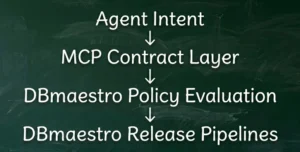
AI + Database DevOps – The Bigger Picture
AI introduces probabilistic decision-making into traditionally deterministic systems.
The MCP Server bridges this gap, allowing organizations to adopt AI-driven operations without compromising reliability, compliance, or control.
What an AI Agent Actually Executes
While interactions with the MCP Server can start as natural language, execution is never ambiguous.
Every request is translated into a structured, validated contract before any action is taken.
POST /mcp/execute

{
  "intent": "deploy_packages",
  "project": "AI_Demo",
  "source_env": "AI_Integration",
  "target_env": "AI_QA",
  "options": {
    "include_dependencies": true,
    "dry_run": false
  },
  "actor": "ai-agent"
}

Response:

{
  "execution_id": "exec_74291",
  "status": "approved",
  "plan": [
    "validate drift",
    "resolve dependencies",
    "apply package order",
    "run pre-check policies",
    "execute deployment"
  ]
}
This model introduces a critical separation:
- AI defines intent
- MCP defines execution
- DBmaestro enforces correctness and governance
The agent never interacts directly with the database, scripts, or pipelines. It operates through a controlled contract that guarantees deterministic outcomes.
Bottom Line
AI is inherently probabilistic, while database releases must remain strictly deterministic, and the MCP Server enforces that boundary by exposing governed capabilities instead of raw infrastructure, effectively serving as the control plane for AI-driven operations; as a result, the DBmaestro MCP Server transforms AI agents into fully governed operators, enabling safe, auditable, and scalable database DevOps execution without compromising enterprise control.
Get your demo now