|
|
- Blog |
- Agentic Database DevOps: From Automation to Controlled Execution


Agentic Database DevOps
Agentic Database DevOps: From Automation to Controlled Execution

For years, DevOps has focused on speed.
Faster builds. Faster testing. Faster deployments.
And to a large extent, it worked.
Application delivery became highly automated. CI/CD pipelines matured. Teams moved from weeks to days, and in some cases, to hours.
But something fundamental was left behind.
The database.
The Missing Layer in DevOps Evolution
Despite all the progress in DevOps, the database layer has remained largely manual, controlled by small teams, and governed through tickets, scripts, and human coordination.
This creates a structural imbalance:
- Applications move at DevOps speed
- Databases move at human speed
And in modern enterprises, especially in regulated environments, that gap is not just inefficiency – it is risk.
Because the database is not just another component.
It is the system of record.

Enter Agentic Database DevOps
Agentic Database DevOps is the next evolution.
It is not about automating more scripts.
It is not about better pipelines.
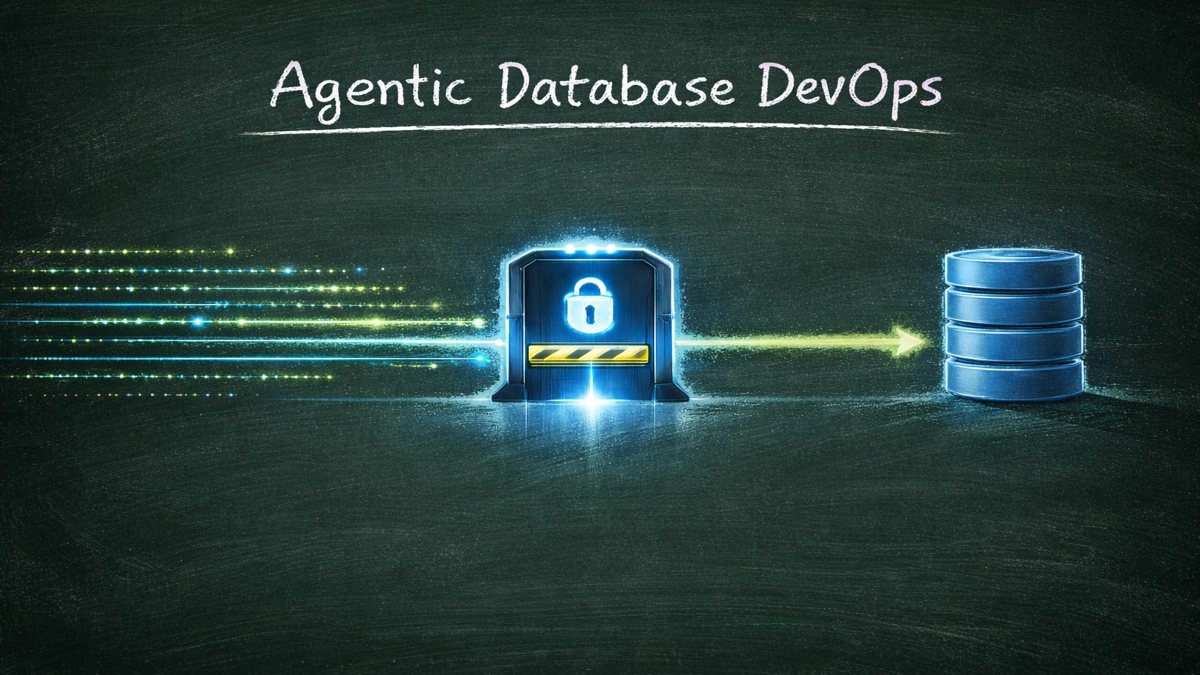
It is about enabling AI agents to execute real database operations – safely, reliably, and under full enterprise control.
In simple terms:
Agentic Database DevOps turns natural language into governed database execution.
Instead of writing scripts, opening tickets, or coordinating across teams, engineers can now express intent:
- “Create a release pipeline across Dev, QA, and Prod”
- “Promote the latest schema version to QA”
- “Validate deployment readiness across environments”
And the platform executes.
Not as a suggestion.
Not as generated code.
As real, controlled, auditable execution.
From Copilots to Operators
Until recently, AI had a very clear role in software delivery.
It assisted.
It suggested code, helped developers think faster, and reduced friction in day-to-day tasks. It became a trusted companion in the development process, sitting next to engineers and making them more productive.
But it always stopped short of one thing.
Execution.
The moment something needed to run, to deploy, to change a live environment – control shifted back to humans. Pipelines, approvals, and governed processes took over.
That boundary is now starting to disappear.
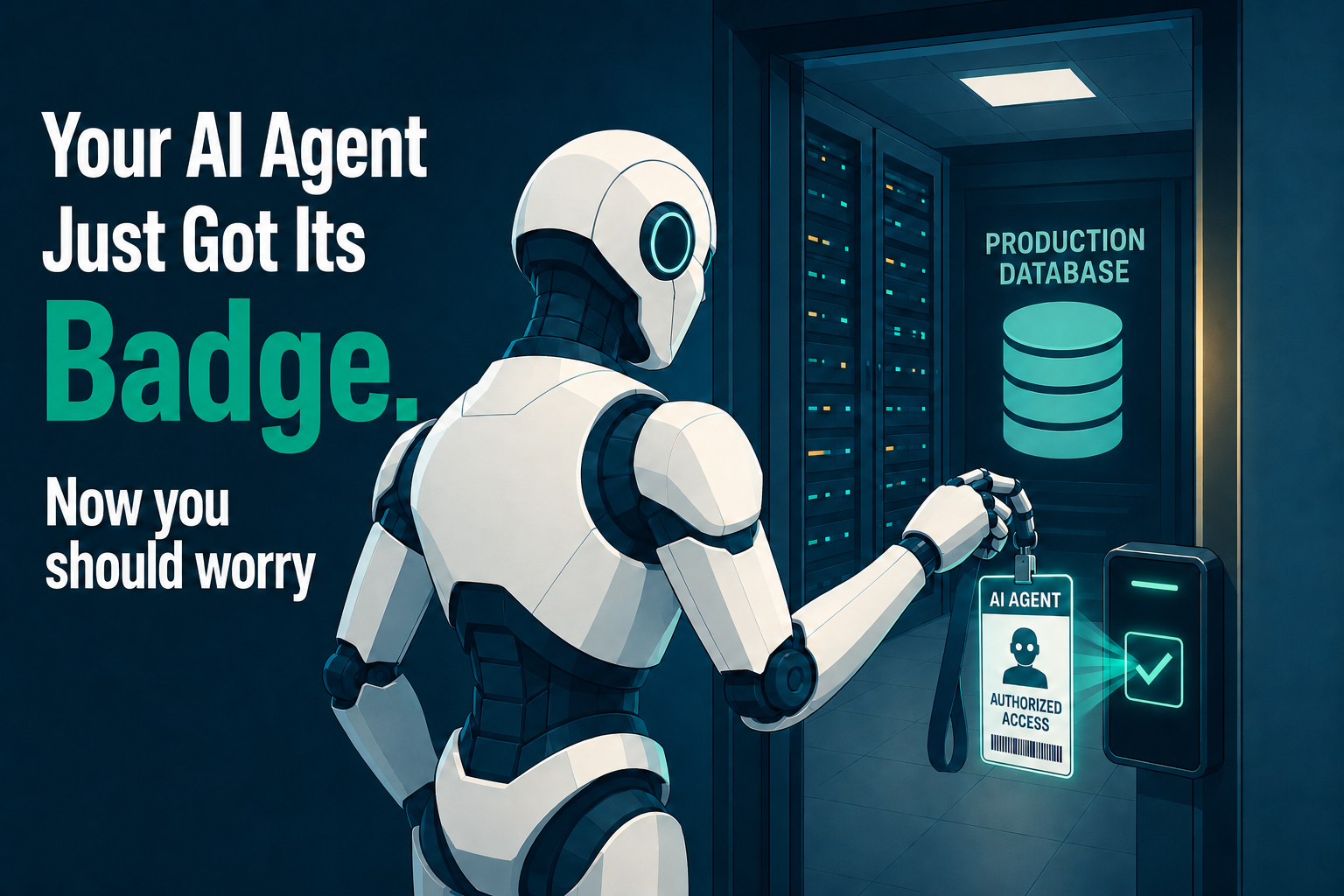
We are entering a phase where AI is no longer just suggesting what should be done. It is beginning to act. Creating pipelines, promoting versions, orchestrating releases across environments.
Not “here’s what you could do.”
But “this is now happening.”
This is a fundamental shift.
Because execution is where things become real. It is where systems change, where environments diverge, where risk is introduced.
And nowhere is that risk more concentrated than in the database.
Why Control Matters More Than Ever
The database is not just another layer in the stack. It is the system of record. It holds financial data, customer information, regulatory evidence, and the operational truth of the business.
Every change to it carries weight.
That is why organizations have spent years building control mechanisms around database operations. Separation of duties ensures that no single actor can push changes unchecked. Role-based permissions define who is allowed to do what. Audit trails capture every action. Compliance processes ensure that nothing slips through unnoticed.
These controls were designed for a world where humans execute changes.
Now introduce AI into that equation.
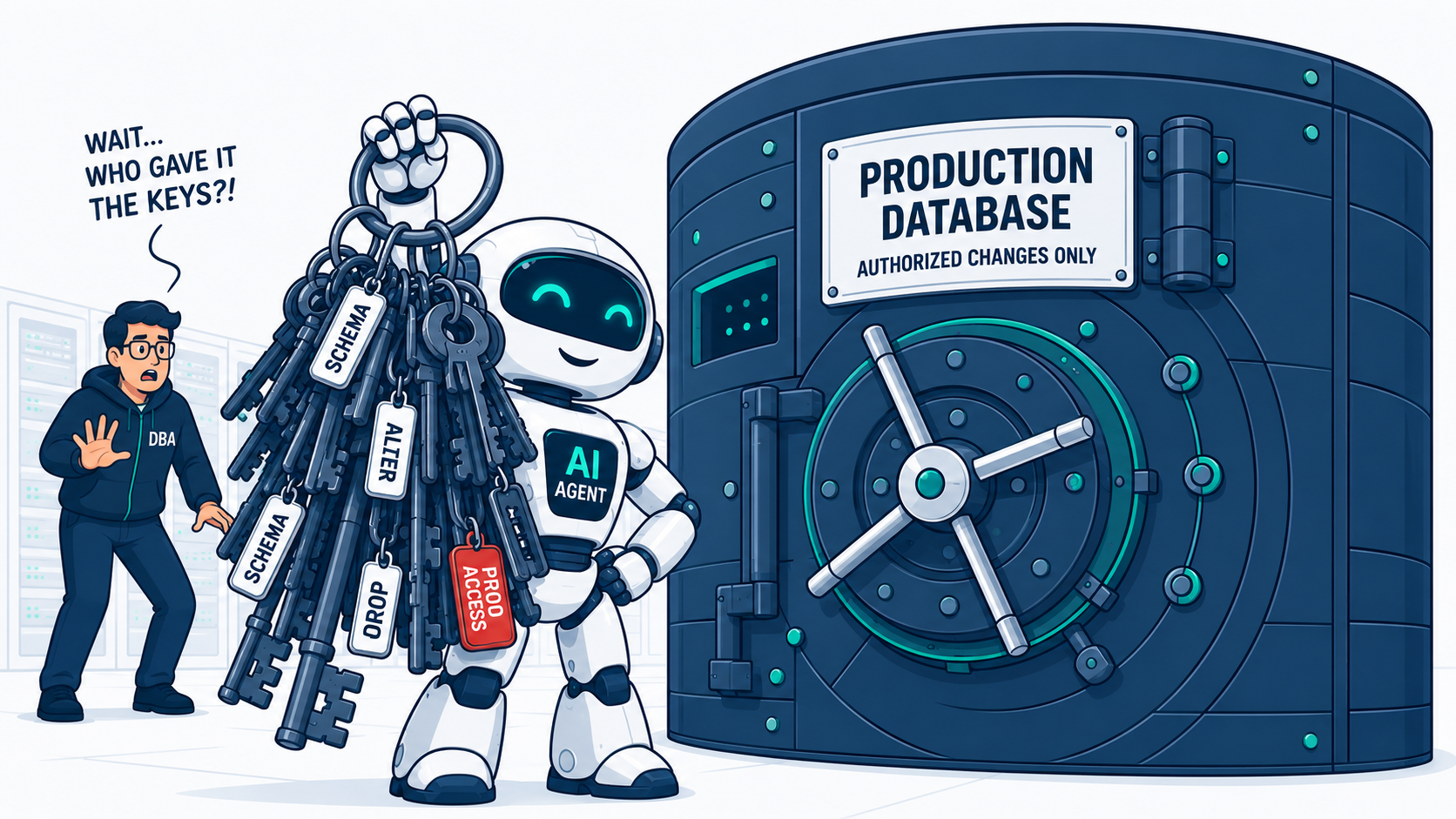
When execution moves from human speed to machine speed, the risk profile changes completely. Without governance, you are no longer dealing with occasional mistakes. You are dealing with the potential for rapid, large-scale, uncontrolled impact.
Agentic Database DevOps addresses this shift directly.
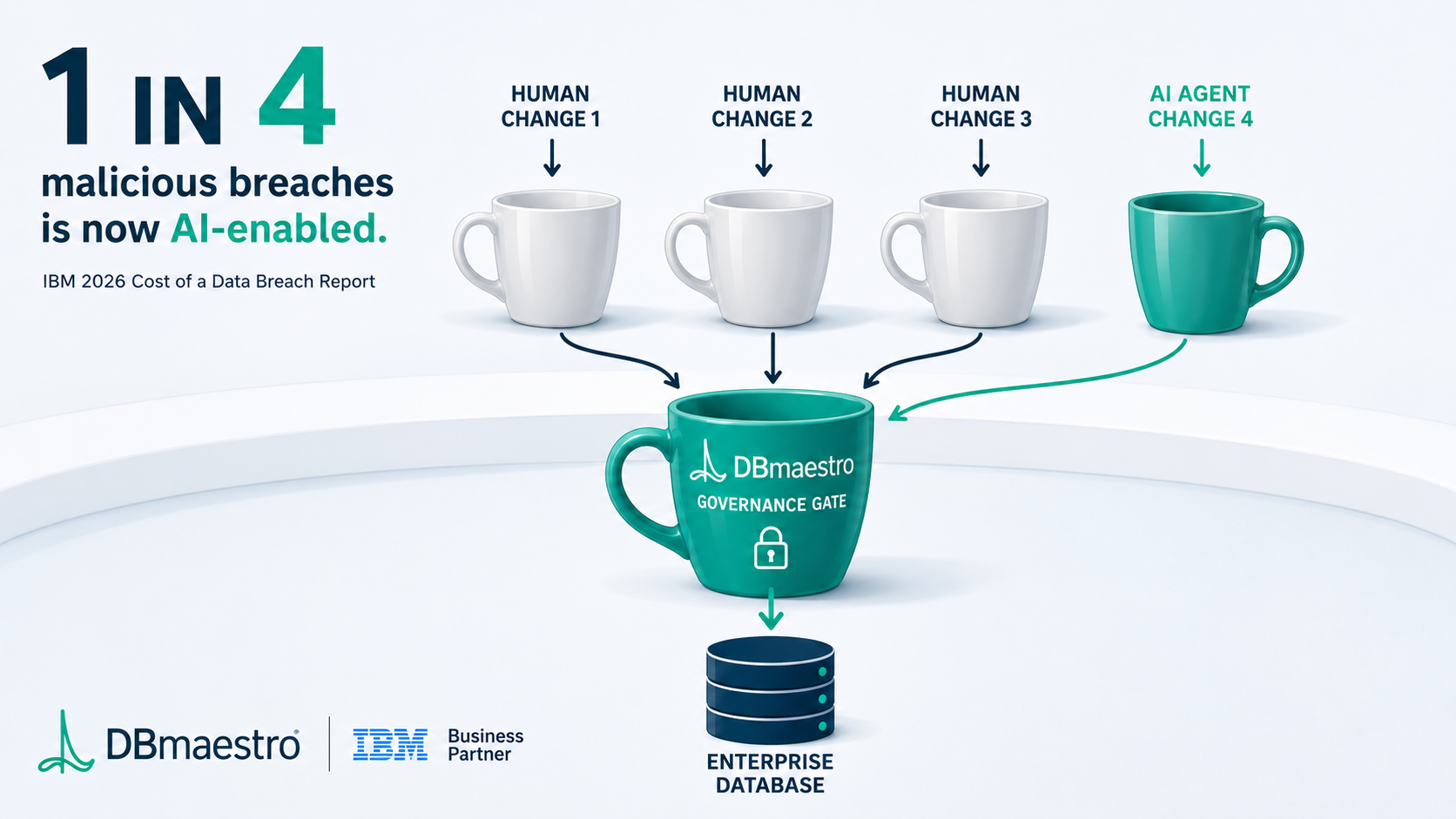
It allows AI to operate, but only within a controlled framework. Every action is evaluated against permissions. Every change is tracked. Every execution follows a defined, deterministic path. Nothing happens outside the boundaries the organization has set.
AI does not bypass control.
It operates inside it.
What This Means for Organizations
When execution becomes both automated and governed, the impact is immediate.
Delivery accelerates, not because corners are cut, but because friction is removed. Tasks that once required coordination between multiple teams can now be triggered and executed in a controlled, consistent way.
Operational overhead begins to shrink. Routine activities like environment setup, pipeline creation, and release orchestration no longer consume valuable engineering time. They become part of a self-service model, driven by intent and executed reliably.
At the same time, compliance becomes continuous. Instead of preparing for audits after the fact, organizations maintain a real-time, complete record of every change, every action, and every decision.
Reliability improves as well. When execution follows deterministic paths rather than manual processes, variability is reduced. The same inputs produce the same outcomes across environments.
And perhaps most importantly, scale is no longer constrained by a small group of experts. Database delivery can expand across teams and environments without increasing dependency on a handful of DBAs.
DBmaestro: The Gateway to Agentic Database DevOps
This model does not work without control at its core.
And control is not something that can be added later. It must be built into the execution layer itself.
This is where DBmaestro becomes essential.
DBmaestro does not simply enable AI to interact with the database. It defines how that interaction happens. Through its MCP server, it exposes database DevOps capabilities to AI agents in a way that is fully governed, fully auditable, and fully aligned with enterprise policies.
When an agent triggers a deployment, it is not improvising. It is executing a structured process that includes release automation, CI/CD orchestration, source control validation, and policy enforcement. Permissions are respected. Actions are recorded. Compliance is maintained.
The interface may be natural language.
But the execution is anything but loose.
It is deterministic, controlled, and transparent.
Every action taken by an AI agent inherits the same enterprise-grade safeguards that organizations rely on today.
From Platform to Execution Layer
With the introduction of MCP, DBmaestro evolves beyond a traditional DevOps platform.
It becomes the execution layer through which AI operates on the database.
This is a subtle but critical shift.
Instead of humans orchestrating every step and AI assisting at the edges, AI becomes capable of driving execution – while DBmaestro ensures that every action remains within the boundaries of control, security, and compliance.
The result is not just faster delivery.
It is safe acceleration.
Organizations can adopt AI-driven execution without compromising the principles that protect their most critical data.
The Bottom Line
AI is gaining the ability to act.
But in the enterprise, action without control is not progress. It is risk.
Agentic Database DevOps brings these two forces together. It enables execution while enforcing governance. It allows speed while preserving responsibility.
Because at the database layer, there is no room for uncontrolled change.
AI can act.
But only through control.
And that control must extend to the database.
Get your demo now