


For years, reliability in software delivery was largely a function of experience.
Skilled engineers knew how to navigate complexity. They understood dependencies, anticipated failure points, and compensated for gaps in process. When something went wrong, they investigated, adapted, and corrected.
Over time, DevOps improved this model. Automation reduced variability. Pipelines standardized execution. Testing frameworks increased confidence. Systems became more repeatable, more observable, and more resilient.
But even with these advancements, one reality remained.
Execution was still influenced by humans.
And where human judgment exists, variability follows.
That variability has always been manageable because execution moved at a human pace. Issues could be detected, paused, and corrected before they cascaded.
That assumption is now changing.
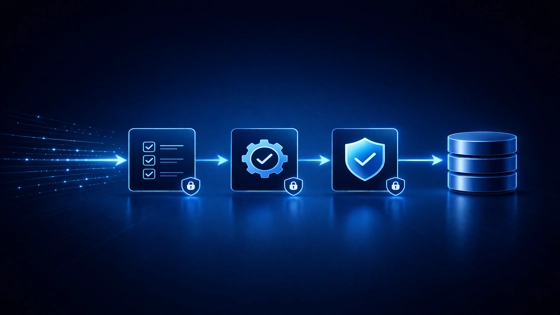
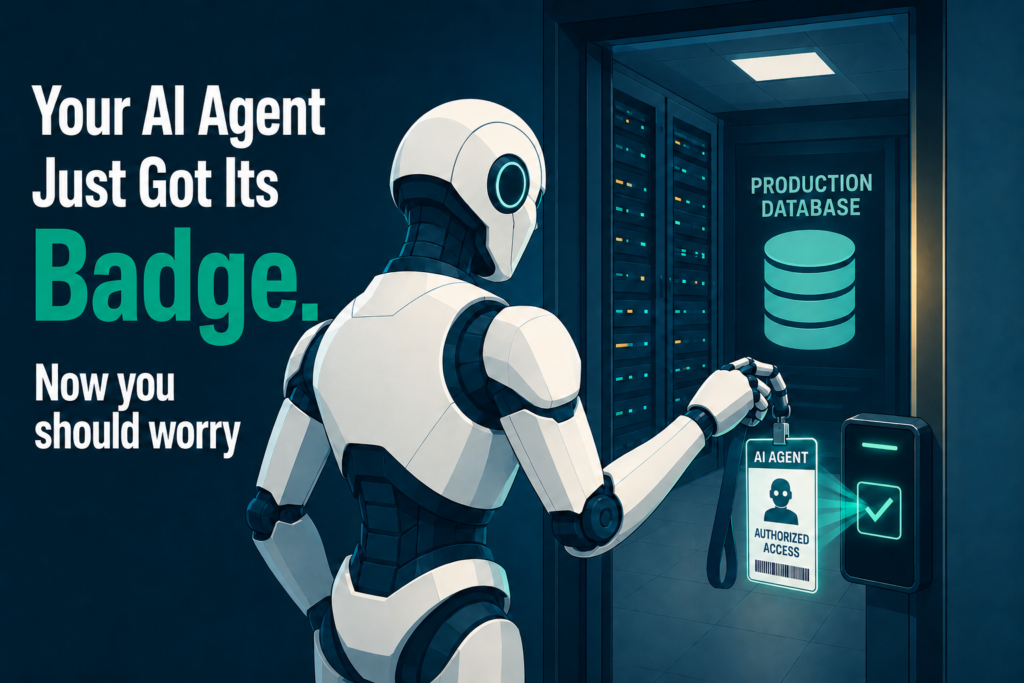
AI is no longer just assisting. It is beginning to execute. It can trigger workflows, orchestrate deployments, and carry out operations across environments without waiting for human intervention.
Execution is becoming faster, more frequent, and increasingly autonomous.
This introduces a new requirement.
Reliability can no longer depend on human awareness.
It must be built into the execution itself.
This is where deterministic reliability becomes essential.
Deterministic reliability means that every action produces a predictable, controlled, and repeatable outcome. The same input leads to the same result, regardless of when, where, or how the execution is triggered.
There is no ambiguity. No hidden variability. No reliance on manual interpretation.
In a deterministic system, execution is defined, constrained, and governed.
This is not just a technical preference. In an agentic world, it is a necessity.
When AI agents execute actions at scale, even small inconsistencies can amplify quickly. A misinterpreted dependency, an overlooked configuration, or an uncontrolled variation can propagate across environments in seconds.
What used to be a localized issue can become a systemic failure.
Deterministic reliability prevents this by removing uncertainty from execution.
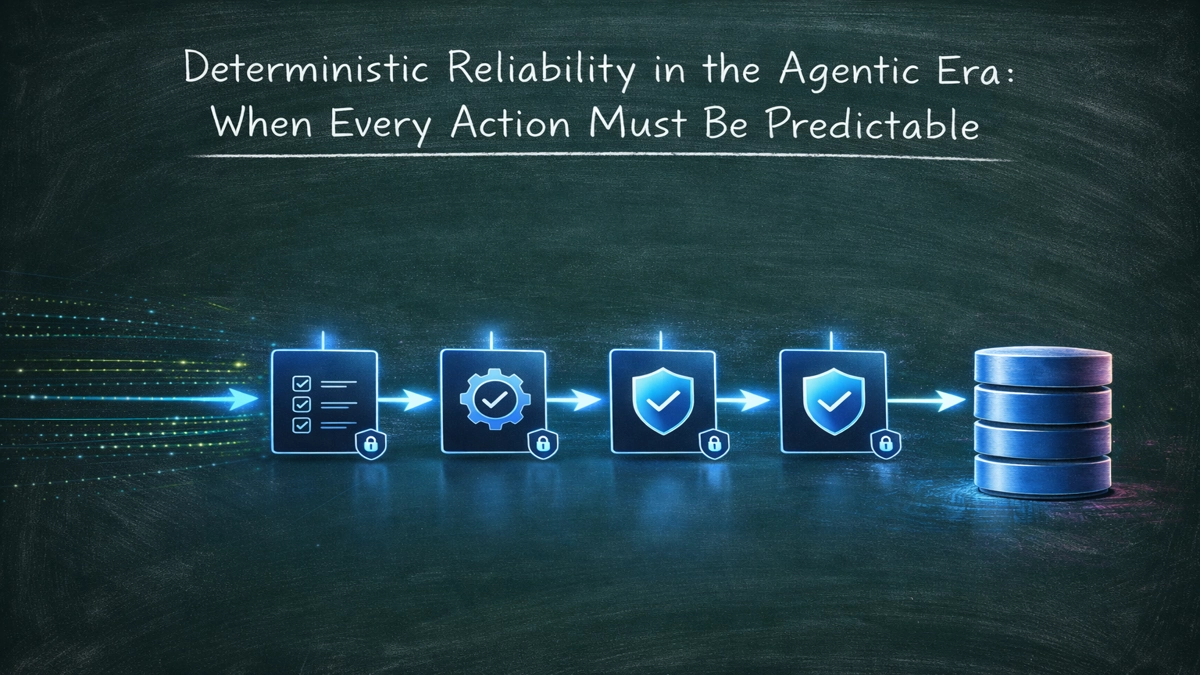
Every workflow follows a defined path. Every dependency is accounted for. Every step is validated before it runs. The system behaves the same way every time.
This becomes especially critical at the database layer.
The database is not just another component. It is the foundation of business operations. It holds transactional data, regulatory records, and the core state of the organization.
Changes to the database are not isolated. They affect applications, reporting, integrations, and compliance.
In many organizations, database changes are still managed through a mix of scripts, manual processes, and environment-specific adjustments. Even with automation, variations often exist between environments. Dependencies are not always fully modeled. Execution paths are not always consistent.
This introduces uncertainty.
And in an agentic world, uncertainty becomes risk.
Deterministic reliability addresses this by enforcing consistency across all database operations.
Every change is versioned. Every dependency is known. Every deployment follows a structured, repeatable process. The same release behaves the same way in development, testing, and production.
There are no surprises.
This is where DBmaestro becomes critical.
DBmaestro brings deterministic reliability into database DevOps by defining and enforcing how changes are executed.
With the introduction of the MCP server, this capability extends into the agentic world.
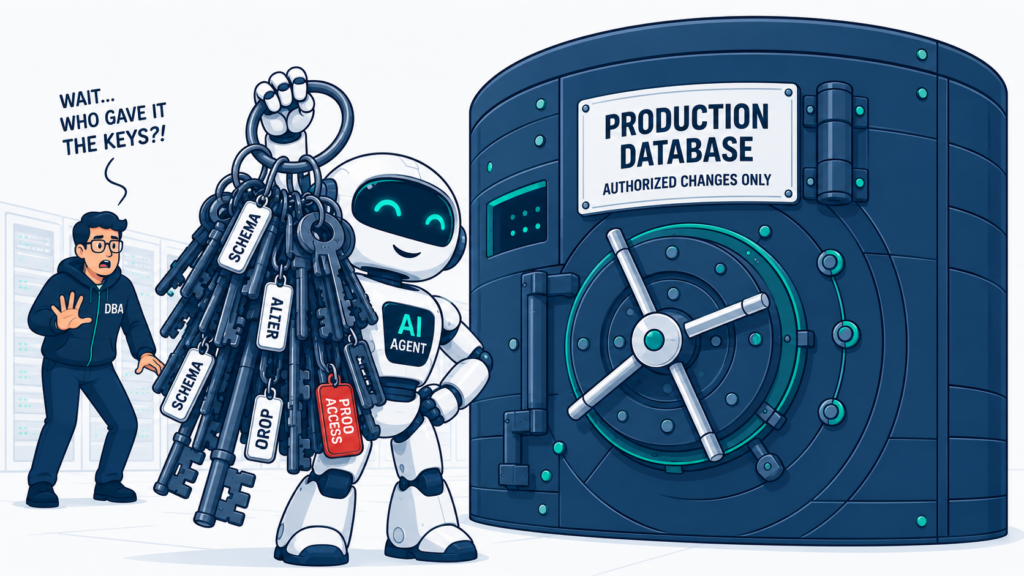
AI agents can initiate database operations, but they do so through a system that ensures deterministic execution. When an agent triggers a deployment, it does not execute arbitrary steps. It follows a predefined workflow that includes release automation, CI/CD orchestration, dependency validation, and policy enforcement.
Every action is predictable.
Every outcome is controlled.
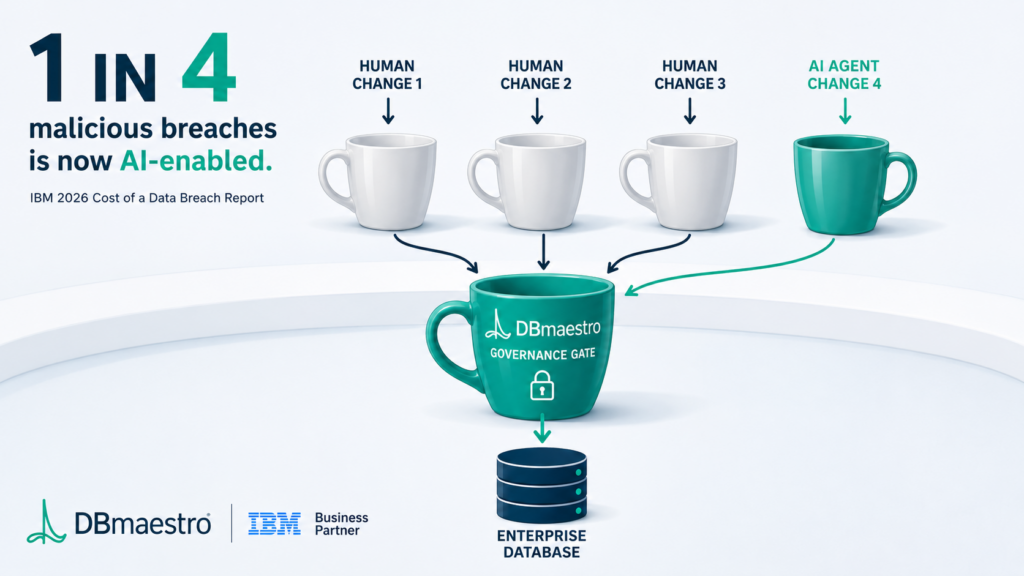
The system ensures that the same request results in the same execution path, regardless of whether it is triggered by a human or an AI agent.
This removes the variability that typically exists in database operations.
It also eliminates the reliance on individual expertise to ensure safe execution.
The benefits to organizations are significant.
First, stability improves. When execution is deterministic, unexpected behavior is reduced. Systems behave consistently across environments, lowering the likelihood of production issues.
Second, recovery becomes faster. Because execution paths are known and repeatable, it is easier to identify where something went wrong and how to correct it. Rollbacks and fixes can be applied with confidence.
Third, scalability increases. Organizations can handle a higher volume of changes without increasing risk, because each change follows a controlled, predictable process.
Fourth, confidence grows. Teams can move faster because they trust the system to behave consistently. This reduces hesitation and accelerates delivery.
Finally, compliance is strengthened. Deterministic execution ensures that every action is traceable and reproducible, making it easier to demonstrate control and meet regulatory requirements.
In an agentic world, these benefits are not optional.
They are foundational.
As AI continues to take on a more active role in execution, organizations must ensure that the systems guiding that execution are reliable by design.
Not reactive. Not dependent on intervention.
But inherently predictable.
Deterministic reliability provides that foundation.
It ensures that speed does not come at the expense of stability, and that automation does not introduce uncertainty.
DBmaestro enables this by turning database execution into a controlled, repeatable process, regardless of who or what initiates it.
Because when systems can act on their own, reliability must be guaranteed.
Not assumed.
And in the enterprise, predictable execution is the difference between acceleration and risk.