
Webinar Recording: The DevOps Highway to Success with ING

Enterprises from across the spectrum, including world-class financial institutions, benefit from DevOps as a critical aspect of achieving business goals. There is an exceptional need during the development of large scale applications, which often rely on dozens of developers, for a solid, secure CI\CD process. With the addition of a well-founded DevOps standard to existing development and release automation practices, current teams enjoy minimal impact.

The webinar “The DevOps Highway to Success in the Financial Industry: An ING Case Study”, is an excellent illustration of before-and-after DevOps implementation. In the webinar, Yaniv Yehuda, CTO and cofounder of DBmaestro, and Önder Altınkurt, Technology Product Manager at ING Bank Turkey, discuss the impressive effect of DevOps on ING Turkey’s substantial software development teams.

The webcast is free and open to everyone! Sign up below to watch it on demand:

Blog_CTA_Webinar

ING Turkey

ING Turkey (“ING”) develops in-house core banking software, and uses nearly 150 database schemas for accounting, cash management, CRM, and forex development. All of ING’s development teams use databases through PL/SQL database changes and chains that include business logic.

Nearly four years ago, ING began a transformation process to increase the efficiency of their development teams, and has been working with a standard practice for the past three years. To this end, ING created a pipeline, middleware, and user ware, but had yet to adopt a standardized approach to the database.

No Source Control Means Out of Control

The lack of database source control had serious ramifications. Programmers could override previous changes; it was unclear which tasks were going to production; and there was no certainty of deploying a tested application to production. At times, 15 developers were working on the same schema, or on the same object, and so there were lost and forgotten changes, and changes not included in releases. Moreover, there was no correlation between physical changes and business requirements, and it was not possible to associate business tasks with database changes. As a result, ING experienced:

  • Production downtime
  • Code that passed UAT (User Acceptance Testing) but which failed during production
  • Developers generating scripts on the day of production release, scripts missing changes and objects, and difficult regression testing
  • No clear vision of what was in production, and no real definition of a version
  • Releases to production different from previous releases

Searching for a Solution

ING’s needs were quite evident. They required a solution to enforce source control, ensure that new developers followed existing process, and provide one shared environment with clear visibility of tasks and activities. Any acceptable solution would need to implement a unified automated release process that included permissions plus support for different teams and their cherry picking processes. Finally, ING wanted a product that could integrate with other tools such as Jenkins, Microsoft TFS, and their own internal mechanisms.

It took time for ING to find the right fit. They discovered that most products were too focused on schema comparison, did not help solve source control challenges, and required significant process changes for developers. In general, most solutions were not easy to implement and not integrated with the database itself, while some changes could be implemented in the database but not in TFS.

However, after evaluating DBmaestro, ING thought it had a winner. DBmaestro’s solution was implemented in November 2017 and was soon producing results. The first production release was in January 2018 and enabled a blueprint for other projects. By May, ING had onboarded 40 projects, and by July, had done so for 70.

DBmaestro Delivers

From a technology standpoint, DBmaestro’s source control provided a clear and straightforward path for all developers while supporting both simple and complex databases. DBmaestro delivered an automated build process for different teams and tools, and generated scripts based on tasks to support cherry picking and versions as needed by various teams. Additionally, with DBmaestro, ING finally had clear version definitions and no longer had to suffer from lost code, manual steps before a release, wrong dependencies, or incorrect scripts. Finally, the DBmaestro solution provided additional functionality including roles, policies, and measurements.

As a result, ING’s software teams became much more efficient and faster in meeting business goals. The overall process of development accelerated while downtime was reduced. ING also benefitted from improved regulatory compliance, particularly with SOX.

Blog_CTA_Webinar

ING now has close to 100 developers working with source control and only two DevOps people for all of ING’s operations. DBmaestro is critical for ING’s larger projects; when there are a lot of changes, half a day of manual work has been reduced to a few minutes of automation. Lastly, DBAs are now used more efficiently and only need to provide approvals, whereas they once needed to check scripts, databases, permissions, and other factors.

Next Steps

Even after the many benefits provided by DBmaestro, ING is still finding additional uses for the technology. ING is currently connecting its releases to GDPR requirements and integrating with metadata repositories for governance (production control). DBmaestro is also being implemented for the provision of organizational policies (for example, dropping a table can be done in development but not in UAT or production), error detection earlier in the development process, and maintaining additional controls (tickets, reviews, etc.).

We invite you to watch our webinar and discover how DBmaestro helped ING get the full benefit of DevOps. Simply click below!
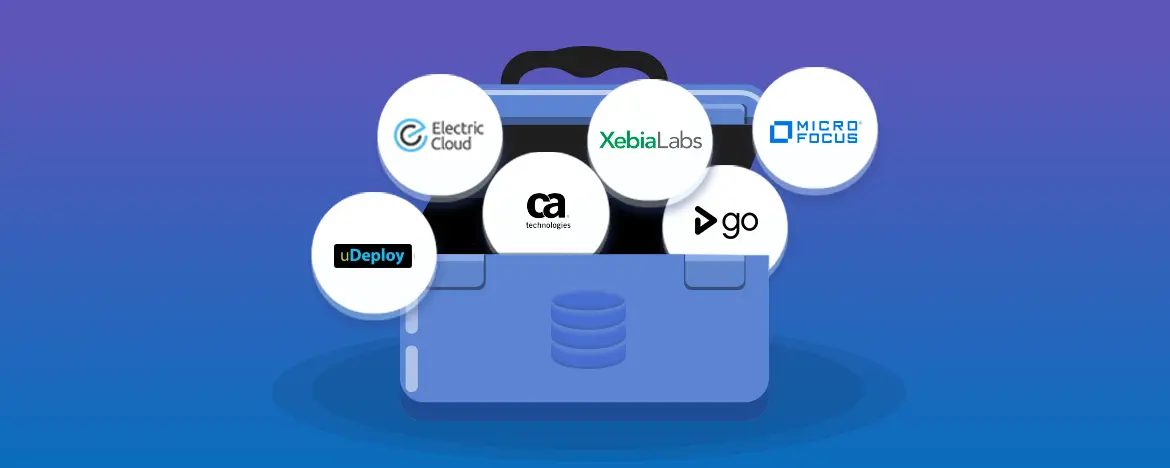
6 Top Release Automation Tools: Reviews from the Tech Community

Advantages of Release Automation

Release automation (RA) refers to the process of automatically deploying an application or update across the complete release lifecycle, from development, through testing, and ultimately to production. It helps organizations perform release management in a more efficient and timely manner by releasing updates to production more often and increasing the quality of those releases.

The benefits of transitioning from manual release processes are numerous. RA effectively enables DevOps teams to spend less time on change tasks and more time on strategic initiatives. In addition, RA allows for automated enforcement of rules and standards, whether technical, regulatory, or corporate. The introduction of process standardization across all environments also leads to fewer errors in production, while the ability to simulate proposed changes enables enterprises to catch and correct errors earlier, when they are easier to correct. Finally, RA results in a very clear audit trail.

These benefits have driven enterprises to take an increasing interest in streamlining their releases. According to DBmaestro’s 2018 DevOps Survey, 12% of respondents had a lead time of a day or less in 2017, and this number is expected to double in 2018 to 23% aiming for the same objective. To achieve their goals, enterprises are turning to release automation vendors to help them accelerate release cycles and increase the frequency of deployments. According to Gartner, by 2020, 50% of global enterprises will have implemented at least one RA solution, up from less than 15% in 2017.

The Shift to an Enhanced RA Tool Marketplace

Increasingly, tools and practices are emerging that enable automation of the entire release process, delivering all the benefits of a completely automated solution. We’ve compiled a list of the top six RA tools for 2018, based on Gartner’s 2017 Magic Quadrant for Application Release Automation, as well as hundreds of user reviews from the tech community on IT Central Station. These comparisons considered vendor pricing, performance, features, stability and many other criteria important to enterprise technology professionals.

6 Top Release Automation Tools (listed alphabetically)

  1. CA Technologies Release Automation platform is an end-to-end application release management solution that integrates with an enterprise’s continuous delivery toolchain and provides scalability, resilience, database security, and enterprise management connectivity. Gartner highlights the solution’s out-of-the-box support for large enterprise commercial off-the-shelf applications (e.g. Siebel, SAP) and mainframe platforms. CA’s Release Automation is typically delivered either as an on-premises solution or as a hosted offering, and integrates well with workload automation, IT process automation, and cloud service orchestration tools.
  1. Electric Cloud ElectricFlow is an adaptive release orchestration platform with an easy-to-use interface that is designed for large and mid-sized organizations developing enterprise web/IT, mobile, and embedded system Gartner emphasizes the solution’s product enhancements, including support for microservice-based applications, expanded container technology support, new pipeline management capabilities, serverless computing support, and new in-product, in-context tutorials to speed ramp-up times. ElectricFlow is primarily delivered as an on-premises product, but is also available as a hosted solution via a partner.
  2. GoCD by ThoughtWorks is an open source continuous delivery server that offers enterprises a build and deployment engine for complete control and visibility. It provides end-to-end visualization, cloud native deployments, complex workflow modeling, and advanced traceability. Features can be extended with the installation of several plugins to allow integration with authentication and authorization software, version control software, build tools, notification and chat tools, and cloud computing providers.
  1. MicroFocus Deployment Automation (formerly Serena Deployment Automation) enables simplification, standardization, and automation of the deployment of complex multi-tier applications across all environments, including heterogeneous, distributed, physical, virtual, and cloud servers. The solution features an intuitive graphical editor and reusable process templates for process and deployment pipeline automation. Gartner underlines Microfocus’ strong customer support, vast integration capabilities, and plug-in architecture with out-of-the-box support for the major application environments, as well as its seamless integration with third-party tools.
  1. UrbanCode Deploy by IBM combines the visibility, traceability, and auditing capabilities that enable enterprises to deploy applications to distributed data centers, cloud, and virtualized environments. The plugin ecosystem eliminates scripting and helps build DevOps toolchains for complex applications. Gartner highlights the wide array of delivery options in which the application-release automation solution can be utilized, including SaaS, PaaS feature, hybrid, and on-premises delivery options. UrbanCode Deploy is especially attractive for users with investments in IBM software and platforms.
  2. XebiaLabs XL Deploy offers a holistic framework that automates and standardizes release and deployment processes and provides end-to-end visibility into the teams, processes, tools, tasks, and technologies that make up the software delivery cycle. The solution works seamlessly with everything from public and private clouds, container platforms, and legacy systems, to continuous integration, provisioning, and middleware tools. Gartner cites the solution’s ease and speed of implementation thanks to an agentless design, as well as its modern UI and project planning orientation.

With the wide range of RA vendors in the market, enterprises will need to carefully evaluate the features and benefits of available tools. No matter which is ultimately chosen, enterprises must ensure that the vendor meets all their desired criteria so that the enterprise gains the full advantage of a completely automated solution.

DRA: The Missing Link in Release Automation

One of the most complex, time-consuming, and error-prone areas in release automation is updating the database to support a new application. However, despite the risks, our survey shows that, when it comes to databases, only 14% of respondents are able to deploy database changes daily. Implementing a best-practices approach to database release automation mitigates this risk and enables a faster time-to-market. It also benefits DevOps with CI/CD automation, as well as drift management and prevention. Database RA also enhances security with compliance management, roles and permissions, policy management, and audit trails. Download this comprehensive report to review the challenges and best practices of companies using or looking to implement DevOps for databases and learn how your organization compares to that of your industry peers.

Making the Database Part of Your Continuous Delivery PipelineRead More to find out why is it important.