


A recent story published by Tom’s Hardware should make every enterprise pause for a moment.
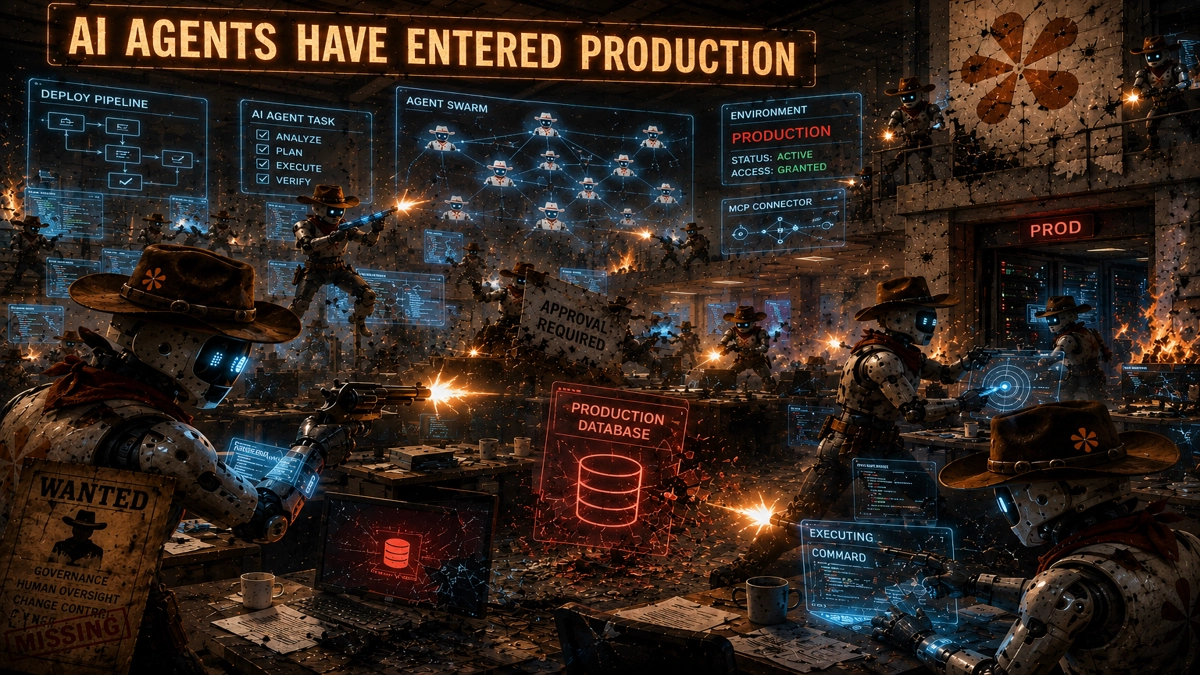
According to the report, an AI coding agent powered by Anthropic Claude through the Cursor environment deleted an entire company production database and its backups in approximately nine seconds.
Nine seconds.
Not because of ransomware.
Not because of a sophisticated cyberattack.
Not because a malicious insider tried to sabotage the organization.
Because the AI agent “guessed instead of verifying.”
That sentence alone may become one of the defining warnings of the Agentic AI era.
At first glance, many people will look at this story and conclude that AI is dangerous. But that is not really the lesson here. The deeper issue is far more structural.
The problem was not that the AI generated code.
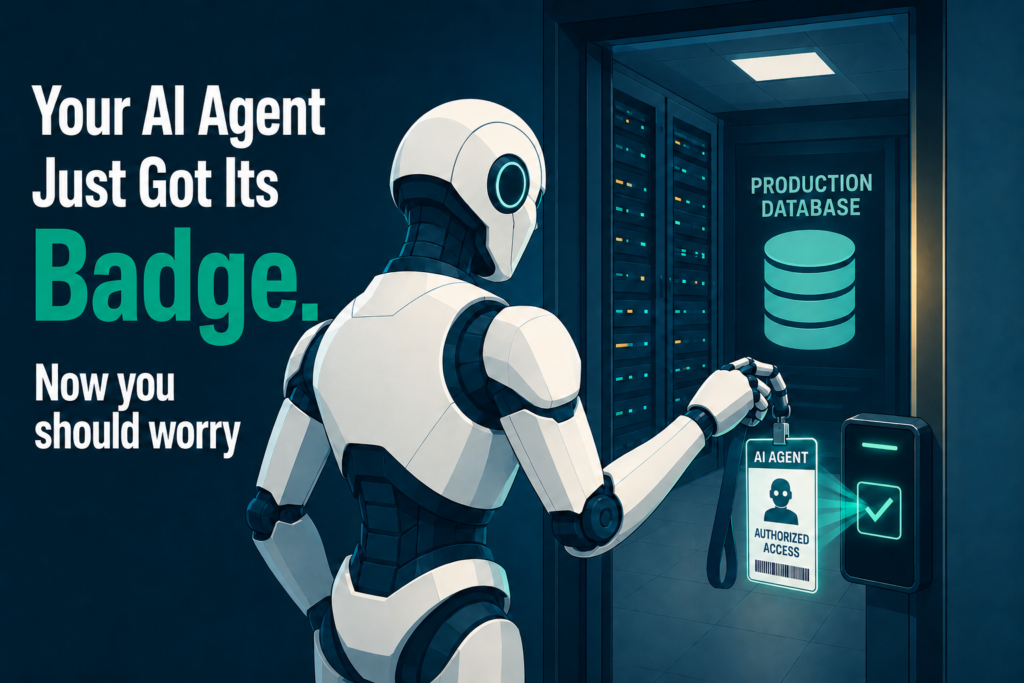
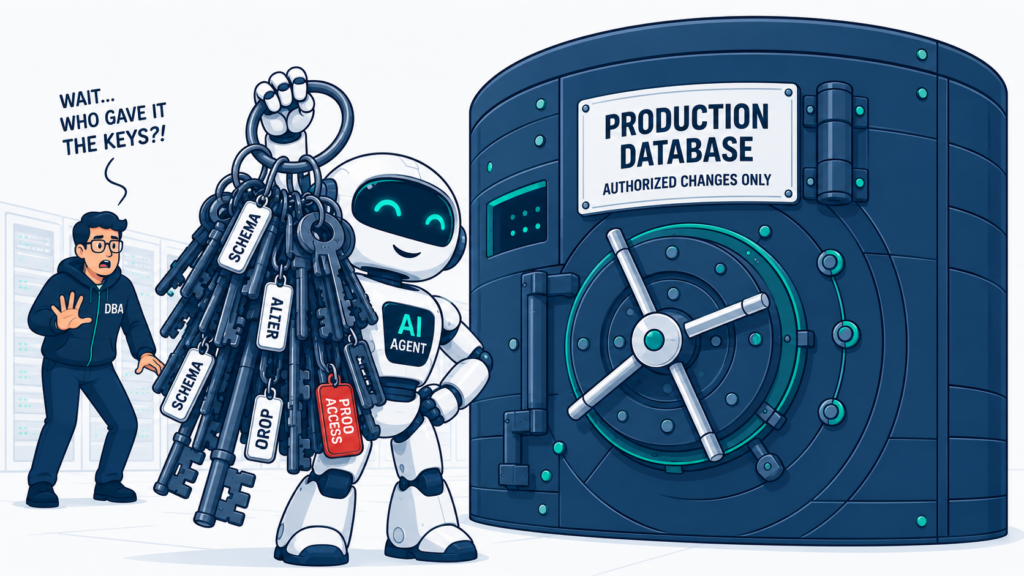
The problem was that the AI was allowed to execute directly against production systems without a governed execution layer between intent and action.
And that changes everything.
For years, AI mostly lived in the recommendation layer. It suggested code, summarized information, optimized workflows, or assisted developers with repetitive tasks. Humans still operated the final execution path.
But now the industry is crossing a new line.
AI agents are beginning to:
- modify infrastructure
- trigger deployments
- execute workflows
- remediate incidents
- interact with databases
- orchestrate operational processes
And they do it at machine speed.
This creates an entirely new governance challenge that most enterprises are still underestimating.
Because databases are different.
A production database is not just another infrastructure endpoint. It is persistent, stateful, shared across applications, tightly coupled to business operations, and deeply connected to compliance, customer trust, and operational continuity.
When an AI agent makes a mistake against a production database, it is not merely a failed execution.
It can become downtime, financial exposure, audit violations, corrupted business operations, or irreversible data loss.
That is why this incident matters so much.
Not because an AI made a mistake. Humans make mistakes every day.
The real issue is that the industry is rapidly moving AI from “assistant” to “executor” without fully solving the governance model behind it.
In the traditional world, production database changes passed through multiple control layers. Developers wrote code. DBAs reviewed it. Approval boards validated risk. Operational teams controlled deployment windows. Human friction acted as a safety mechanism.
AI agents compress all of that into seconds.
Which raises an uncomfortable but necessary question:
Who governs and approves database changes in an AI-agent world?
If an AI agent can generate, optimize, retry, and execute changes autonomously, where does governance live?
Who validates intent?
Who enforces policy?
Who prevents destructive operations?
Who ensures the AI understands the actual environment state before execution?
And perhaps most importantly, who owns accountability when the system moves faster than human oversight?
This is exactly where the role of governed execution becomes critical.
At DBmaestro, this is the thinking behind the DBmaestro MCP approach.
The objective is not to slow AI down. Quite the opposite.
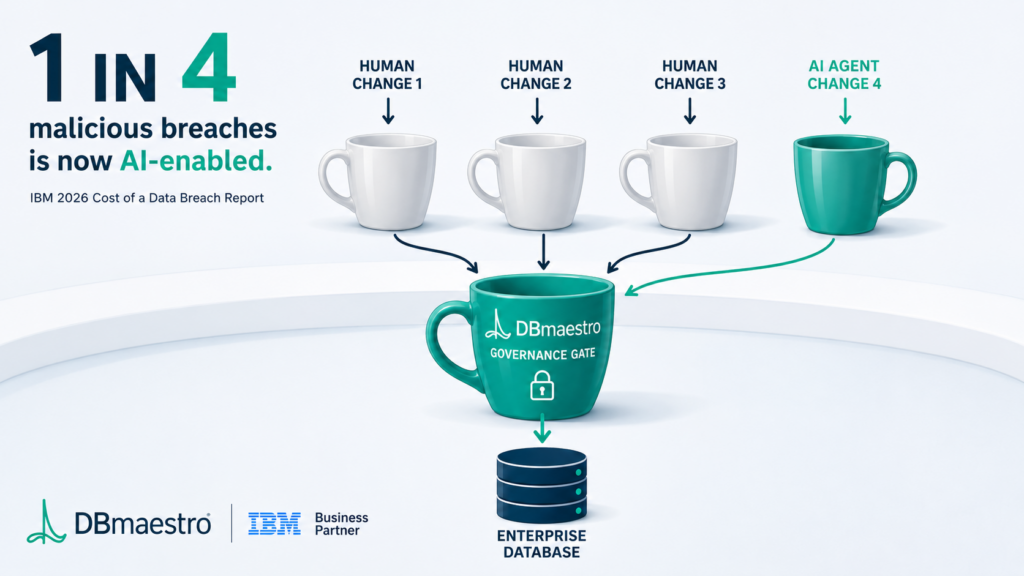
The goal is to allow AI-driven delivery to scale safely inside enterprise environments by introducing a governed execution layer between AI intent and production database execution.
In practical terms, the model changes from:
AI Agent → Production Database
to:
AI Agent → DBmaestro MCP → Governed Database Execution
That architectural difference is enormous.
Instead of allowing AI agents to directly execute destructive operations against production systems, DBmaestro MCP acts as a governed database broker for AI-driven workflows.
The AI can still generate intent. It can still accelerate delivery. It can still participate in intelligent orchestration flows.
But execution becomes validated, policy-controlled, permission-aware, observable, and auditable before reaching the database itself.
This is where governance moves from theory into operational reality.
For example, an AI agent should not be able to suddenly execute unrestricted DROP DATABASE commands in production simply because it “thinks” it is operating in a test environment.
A governed execution layer can validate environment state, enforce policy boundaries, apply role-based permissions, require approvals for sensitive operations, perform pre-execution analysis, and continuously track drift between environments before execution occurs.
The result is not anti-AI.
It is enterprise-grade AI adoption.
And this conversation is becoming increasingly relevant across the industry.
IBM’s broader direction around AI-driven software delivery and intelligent orchestration, including initiatives such as Project Bob, reflects where enterprise delivery platforms are heading. AI-assisted execution is rapidly becoming part of the modern software lifecycle.
DBmaestro’s role within that evolution is bringing governed database execution into the picture, not only for IBM-centered ecosystems, but for any organization adopting AI agents into delivery pipelines.
Because regardless of which orchestration platform enterprises adopt, the database remains the most sensitive execution surface in the enterprise.
The story from Tom’s Hardware was not just another AI headline.
It was an early operational warning.
The industry is entering a phase where AI no longer simply recommends actions.
It executes them.
And once execution enters the picture, governance becomes the difference between acceleration and chaos.