


For years, interacting with systems required translation. Not human translation, but technical translation. An engineer knows what they want to do. Deploy a change. Create a pipeline. Promote a version across environments. But before anything happens, that intent must be converted into something the system understands. Scripts, configurations, pipeline definitions, manual steps.
This translation layer has always been the hidden friction in software delivery - it slows things down, introduces errors, and creates dependency on specialists. Most importantly, it separates what we want to do from what actually gets executed.
Natural Language Workflows change that, by removing the translation layer.
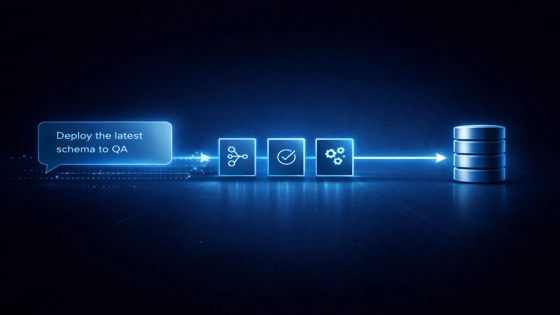
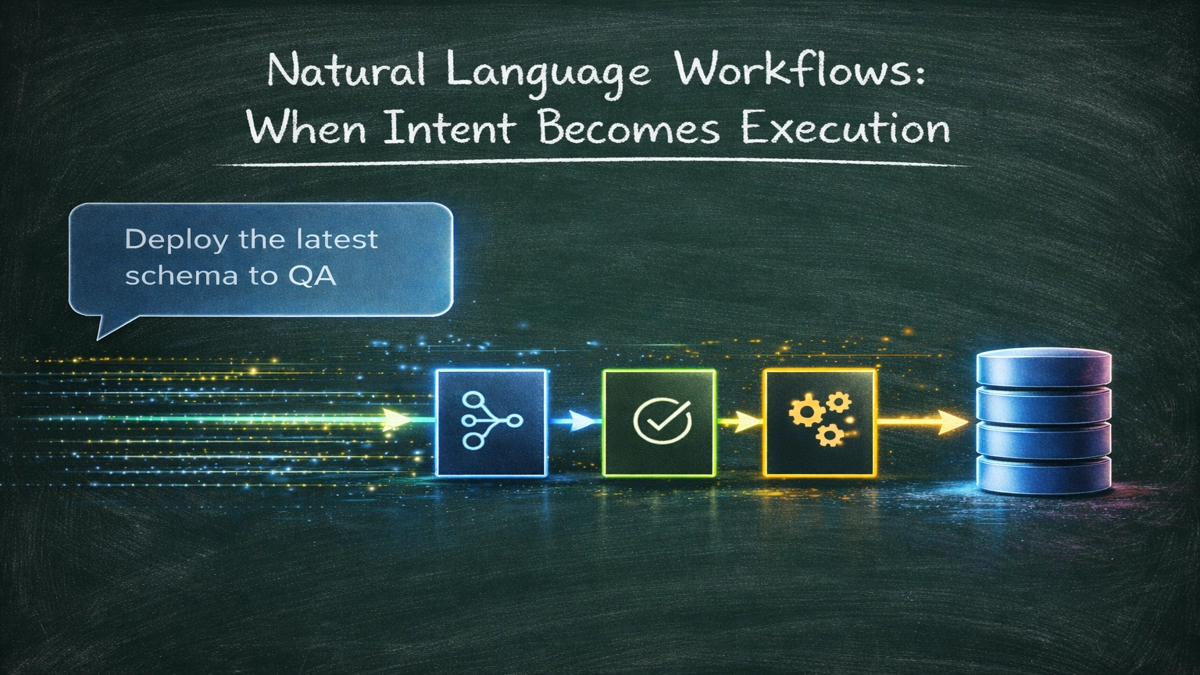
Instead of expressing intent through code or configuration, teams can express it directly. Create a release pipeline across Dev, QA, and Prod. Deploy the latest schema version to QA and validate dependencies. Prepare a release package and promote it to production with approvals.
And the system understands. Not as a suggestion or as generated code waiting for review, but as a trigger for real execution. Intent becomes action, and this is where things start to shift.
Natural language interfaces are not new, but until recently they were mostly used for querying, searching, or retrieving information. What is different now is that natural language is becoming a way to drive execution. When language becomes execution, the barrier between thinking and doing becomes much smaller. Teams can move faster, interact more intuitively, and reduce the overhead of technical syntax. But it also introduces a new challenge. When a simple sentence can trigger complex operations, control becomes critical. A single request can initiate changes across multiple environments, update schemas, orchestrate releases, and impact production systems.
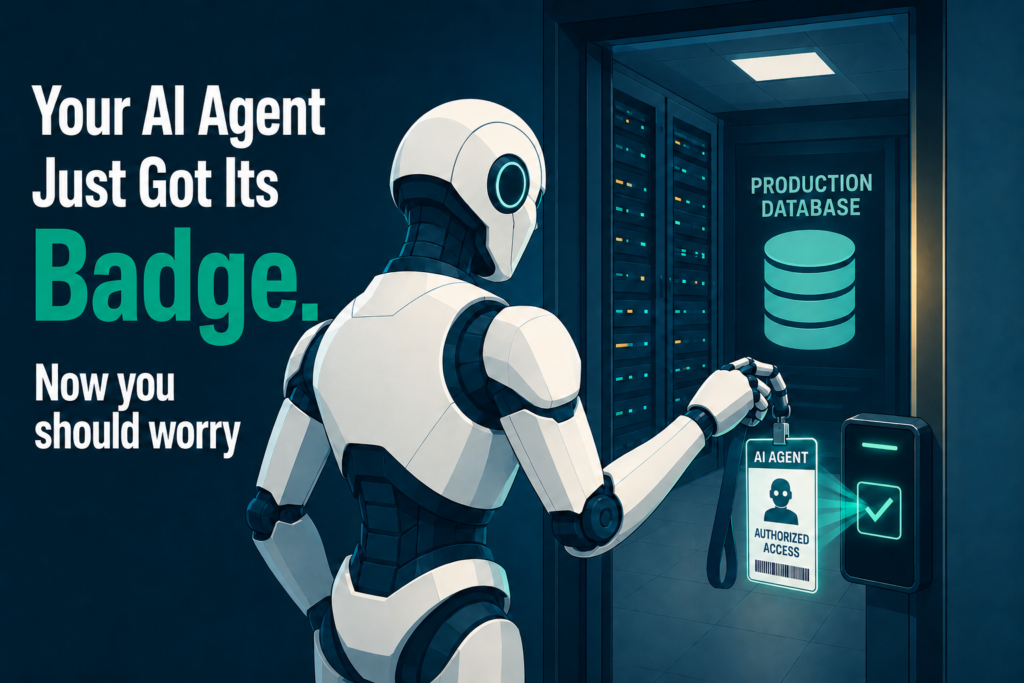
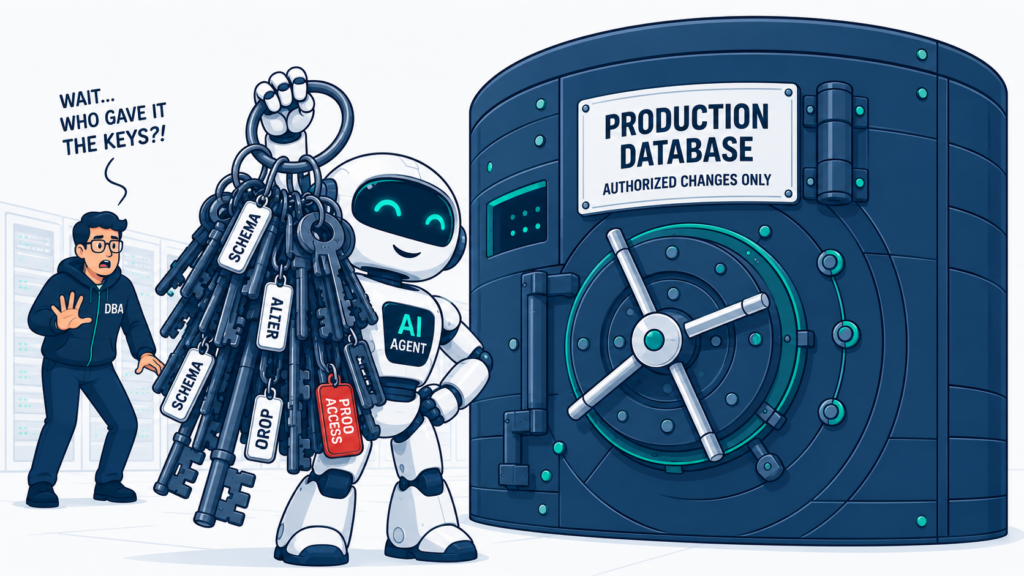
Without governance, that simplicity becomes dangerous.
Natural language is flexible by nature. It is open to interpretation. It is not deterministic on its own. In an enterprise environment, that is not enough. Execution must be predictable, controlled, and fully traceable, and this is where most approaches fall short. They focus on understanding language, but not on governing execution.
In an agentic world, natural language is no longer just an interface. It becomes the command layer. AI agents interpret intent and carry out actions across systems. Humans define what needs to happen, and agents execute. But that only works if there is a structured bridge between intent and execution. Natural language cannot directly trigger uncontrolled actions. It must flow through governed workflows.
That is what Natural Language Workflows really mean in practice: It's not just about understanding what was asked. It is about ensuring that what gets executed follows the organization’s rules, permissions, and policies, every time.
Enter DBmaestro.
DBmaestro doesn't treat natural language as a shortcut. It treats it as an entry point into a controlled system.
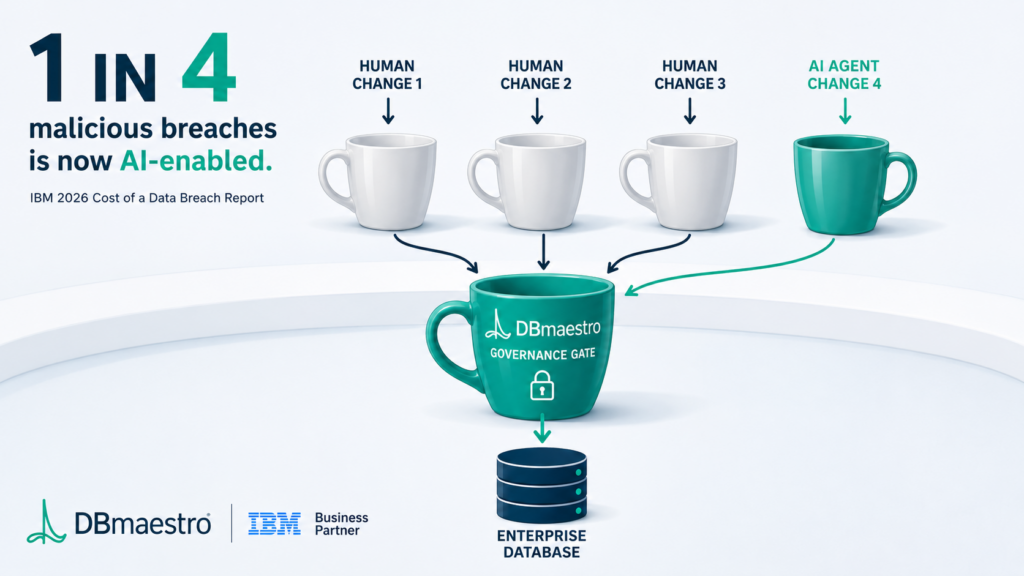
With DBmaestro's MCP server, natural language requests are translated into structured workflows that already exist within the platform. When someone asks to create a pipeline or deploy a database version, the system does not improvise. It maps that request into defined release automation processes, CI/CD orchestration steps, permission checks, and audit logging.
The interface feels simple, the execution is anything but. It is deterministic, governed, and transparent. Every action follows the same enterprise-grade controls that organizations rely on today. As a result, this shift changes how teams interact with technology.
For years, engineers had to learn the language of systems. SQL, YAML, pipeline syntax, scripting frameworks. Now systems are learning the language of engineers, but the complexity does not disappear. It moves behind the scenes, into the execution layer. That layer needs to be strong enough to absorb that complexity without exposing risk.
DBmaestro provides that layer for database DevOps. It allows teams to move from syntax-driven interaction to intent-driven execution, while maintaining full control.
The impact on organizations is immediate:
- The gap between decision and action shrinks. Teams can move from intent to execution without intermediate translation steps. Dependency on specialists is reduced, because interacting with the system becomes more intuitive. At the same time, execution remains consistent across environments, because it is driven by standardized workflows.
- Compliance improves as well. Every action is still governed, tracked, and auditable, even when triggered through natural language.
- Productivity increases, not because people work harder, but because friction is removed.
Natural Language Workflows are not just about convenience. They represent a shift in how systems are used. Instead of writing instructions, teams express intent. And in an agentic world, that intent becomes execution. But execution without control equals risk.
Natural language is becoming the new interface. Agents are becoming the operators. The question for enterprises is not whether AI can understand intent. It is whether that intent can be executed safely. DBmaestro answers that by turning natural language into governed execution at the database layer. Because in the enterprise, clarity of intent is not enough. Execution must be controlled, and that control must be built into the workflow itself.