


Your Db2 DevOps team already runs one of the most disciplined change processes in the enterprise. This series is about making it count for more.
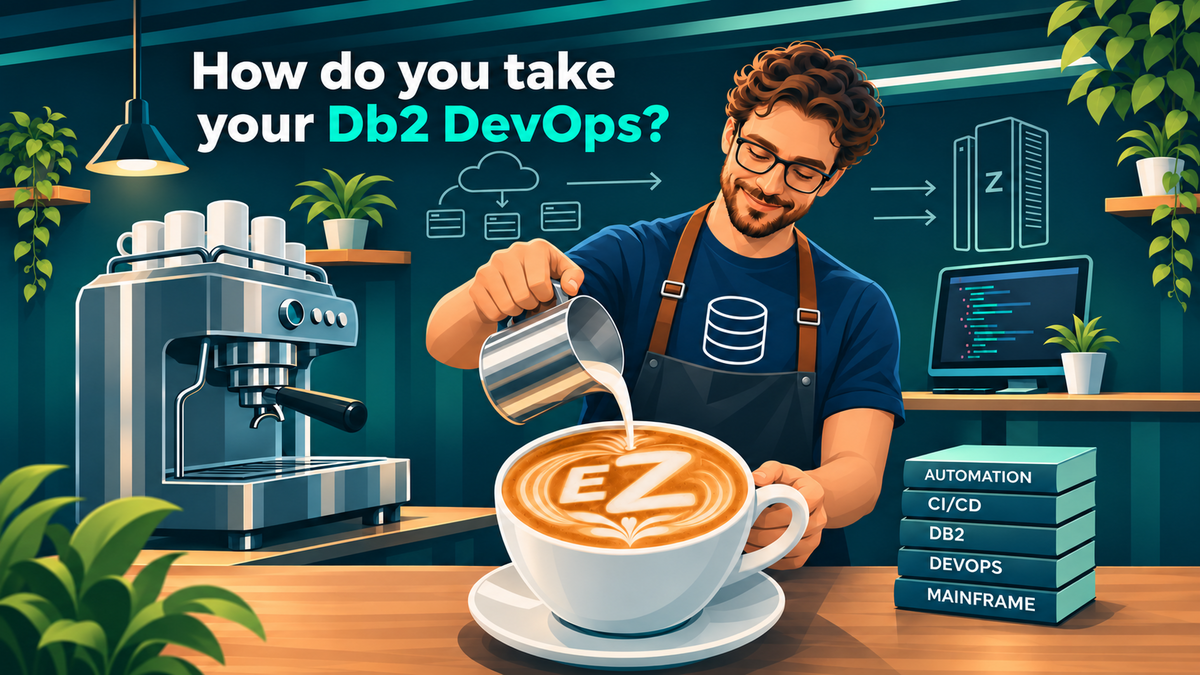
Ask a good barista how they pull an espresso and they’ll talk about grind, dose, temperature and timing. Ask a Db2 team how they release a change and you get a similar answer: naming standards, rebind sequencing, authorization checks, and who signs off before anything reaches production.
Db2 teams on z/OS and LUW run some of the most mature change practices in any enterprise. Most of that maturity lives in people’s heads, in runbooks, and in scripts that maybe two people fully understand.
Over the next five weeks I’ll look at what happens when a Db2 team puts the discipline it already has on a platform that extends it. The DBA’s judgment stays in charge. DBmaestro gives it more reach.
What Db2 release automation looks like
For a Db2 team, release automation means your standards get applied on every change without someone checking by hand.
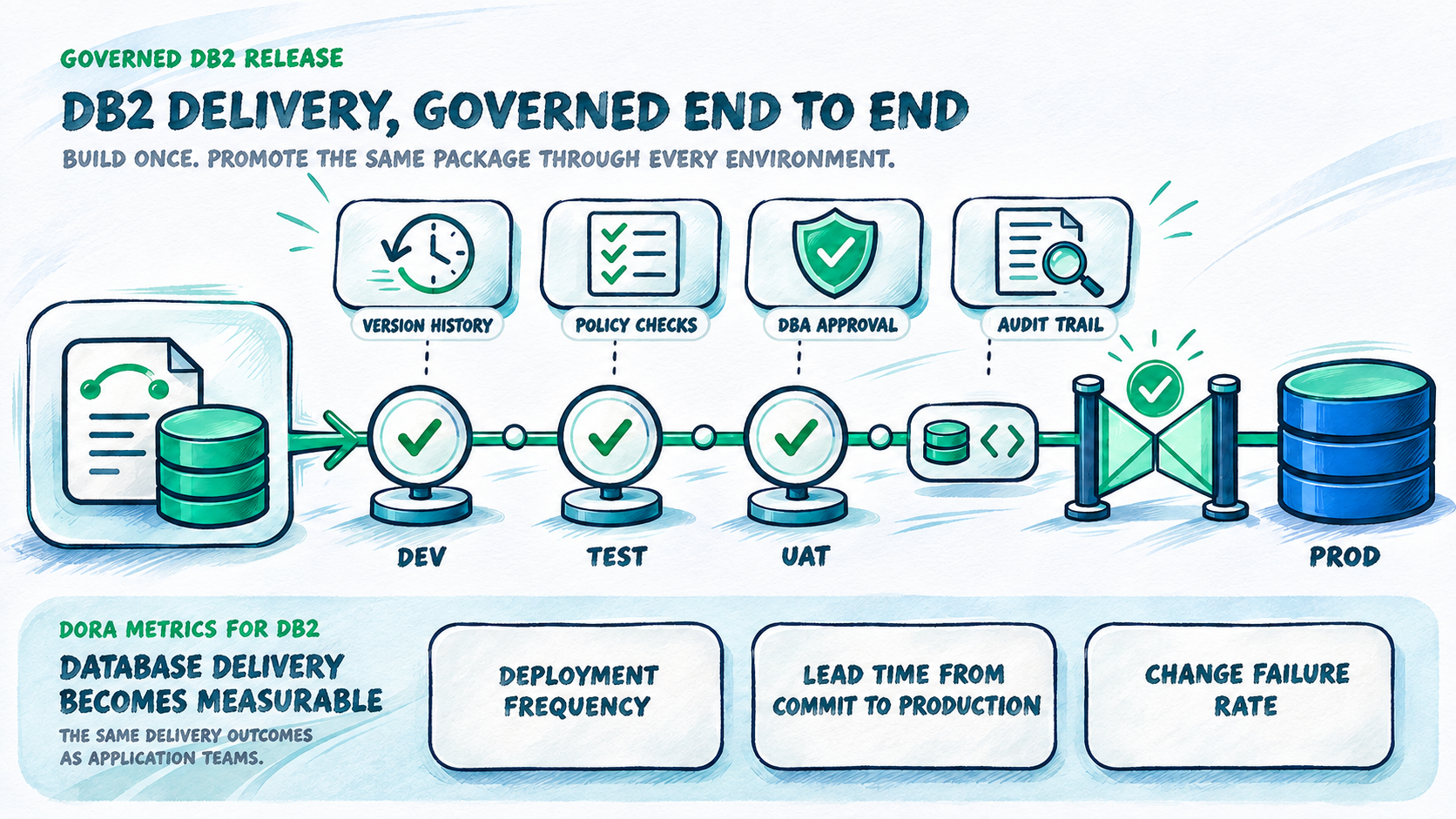
With DBmaestro, Db2 schema changes, DDL, DML and stored procedures go into Git with a full history of who changed what, where, when and why. The package your team builds once is the same package promoted through Dev, Test, UAT and Production. The scripts your team already wrote stay in use and become versioned, reviewable assets.
From the first release, DBmaestro documents every change automatically, so the person who joins next year inherits the reasoning behind it. Over 100 built-in policies, plus your own rules, check each change for naming conventions, prohibited patterns and risky statements before it moves. You set approvals per environment, and production still needs the same people it always needed.
DORA metrics for Db2: putting database delivery on the CIO dashboard
Today, people outside the team mostly notice Db2 work when something goes wrong. When releases run through a governed platform, the work becomes measurable: deployment frequency, lead time from commit to production, and change failure rate. These are the DORA metrics application teams already report to leadership, and the Db2 team now has its numbers on the same dashboard.
That changes how the Db2 estate shows up in modernization discussions. It's usually described as the thing that needs modernizing. A Db2 team with versioned, automated, measured delivery can show it's already running modern delivery.
One process for Db2 for z/OS and Db2 LUW
Db2 for z/OS and Db2 LUW run in the same process. IBM also offers the platform as DBmaestro Database DevOps for IBM, through its distributed and IBM Z catalogs, and it works with IBM DevOps Deploy. For most Db2 shops it comes through a vendor relationship they already have.
Next week I'll cover governance, where Db2 teams have been the control owners for years.
How does your team handle Db2 changes today? I'm curious what works well and what still depends on memory.
DBmaestro is IBM’s strategic OEM solution for Enterprise Database DevOps, Observability, and Compliance.
Commercially integrated into IBM’s DevOps ecosystem and go-to-market strategy, delivering enterprise-grade database automation, governance, and control at scale.